
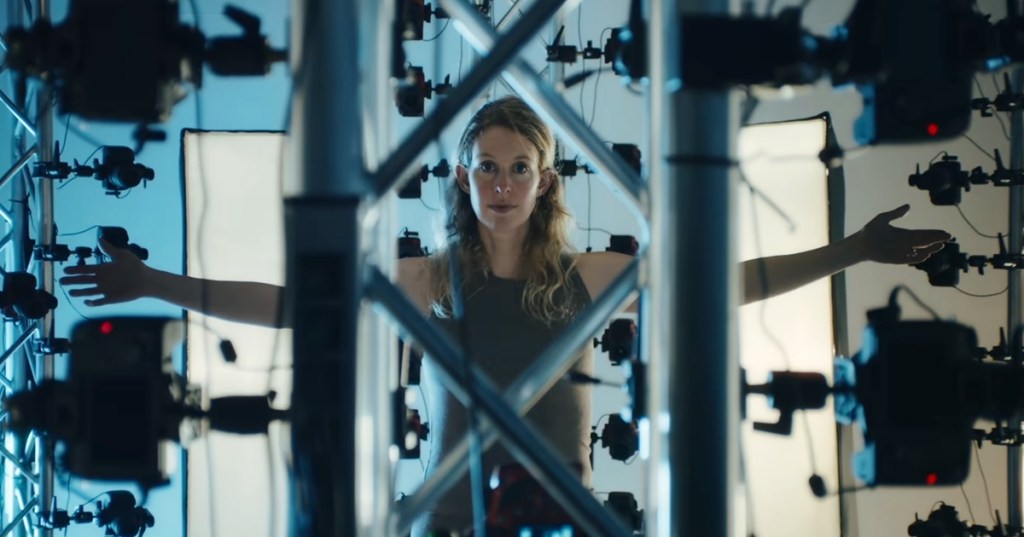
Director Lance Oppenheim recently gave us his first narrative feature, Primetime, a biopic that felt a lot like a documentary. Not even a month later, A24, which also released Primetime, is giving us the hotly anticipated You Can See Everything, a kind of a non-traditional documentary about infamous ‘fraudster’ Elizabeth Holmes, that opened to intense acclaim at this year’s Telluride Film Festival, where its viewers were forced to surrender their phones during the screening to keep information from being leaked before the film came out. You may be thinking, as I was, what’s the big deal? What could be so juicy, so shocking, so mind-blowing to require this kind of secrecy before a documentary film even comes out?
Having seen the film, I’ll just say there’s plenty. A24 absolutely took the correct precautions before the release of this film, probably because it realized what it had on its hands, but also because it knew Fielder and Oppenheim’s film would be the kind of game changer documentary that shifted public perception of what this kind of film should look like. In this review I’m going to allude to some things but I’m going to consciously attempt to not spoil anything, because arguably the best thing about You Can See Everything is the sense of discovery. The film kept surprising, shocking and delighting me, and in the event details have not been spoiled for you yet, I’d like to preserve that experience for you. Spoilers for this film are everywhere online, but you’re not gonna find them here. I saw the film about a week ago and I’m still working through it in my head, so forgive me if my thoughts seem a bit fragmented. But I also know I need to see this film again as soon as possible.
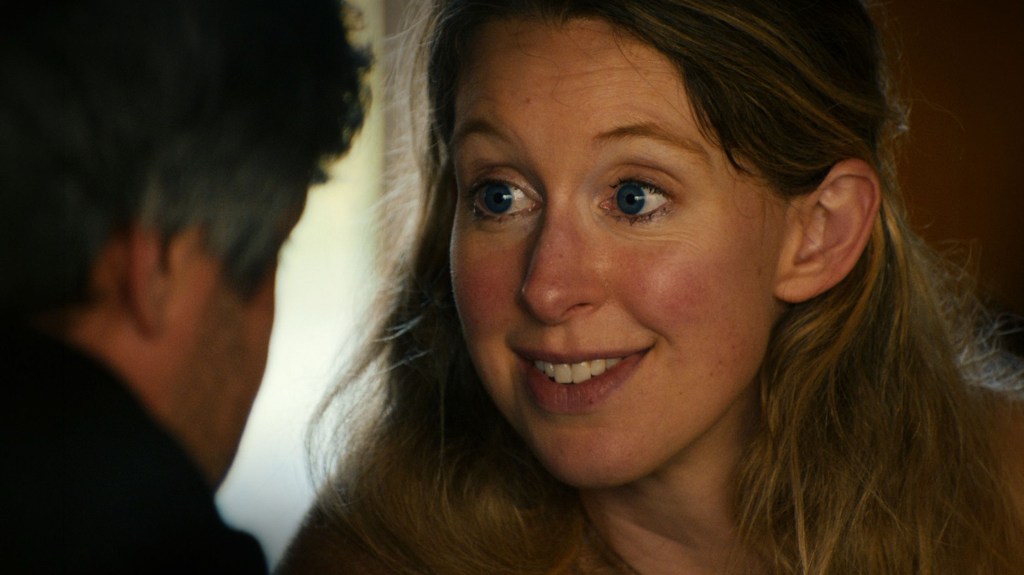
It’s summer 2023, and Elizabeth Holmes is about to go to prison for defrauding investors of her company Theranos, following a long and very public trial. Director Nathan Fielder is called upon to come to the home of Elizabeth and her husband Billy, to document the 34 days before she goes to a federal prison in Texas. The dynamic is immediately shaky, uncertain and elusive. Neither Elizabeth nor Billy gives a straight answer to anything. The more time Nathan spends with Elizabeth and Billy, the stranger everything seems. And then about halfway through, things take a turn, and that’s all I’m going to say about that.
I saw You Can See Everything with a sold-out crowd last weekend and have been collecting my thoughts about it since. Before I get into anything else, I’ll say don’t wait for this to go on streaming. See it with a crowd, because it’s surprisingly one of the best communal experiences I’ve had in a theater all year. The way you could feel that deeply uncomfortable tension in certain moments, and then the laughter and reaction sounds that provide levity when something absurd happens, it all made for some of the most fun I’ve had in a movie theater all year. Not only that, but see it in a theater and go with friends, because you’ll want to discuss it afterward. Who, if anybody, was right, who was the most wrong, and who was the real hero or villain of this story. There’s so much to take in, so much to process, I can confidently say you’re going to be thinking about this film long after you leave the theater. I left it in kind of a daze, kind of disoriented by what I’d just watched. And I love it when a film can do that.
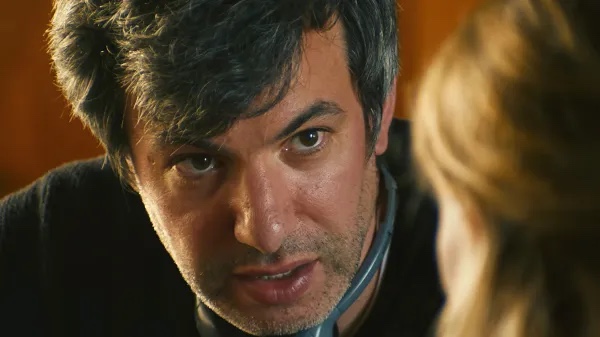
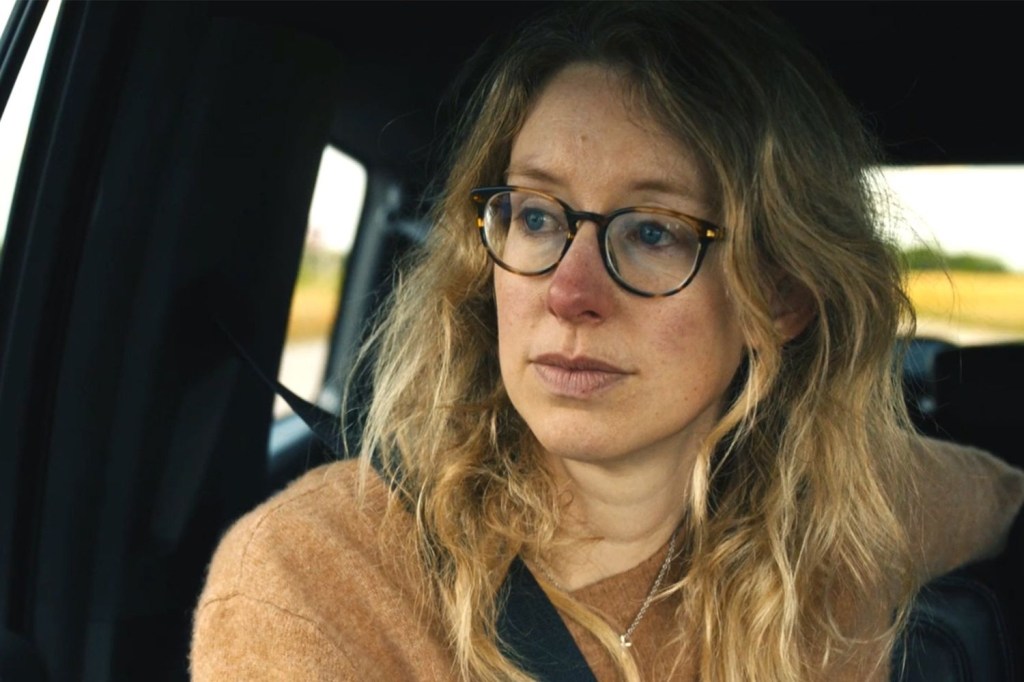
Elizabeth Holmes is enigmatic and impossible to know. She still swears she did nothing wrong, and swears the Theranos machine works. And she seems to have earnestness in her eyes, but a deeply manic, unhinged thing going on as well. Nathan Fielder isn’t trying to get her to confess to anything exactly, but he’s trying to understand her, so maybe we can understand her, and it becomes clear as the first half goes on, how impossible that is. The deadpanned, unblinking way she dances around the simplest questions and answers nothing is almost artful. It’s like a tightrope walk or a dance, something she’s incredibly skilled at, and shows how dangerous she could be. And yet, the more we learn about Billy, the more we realize maybe Elizabeth isn’t the one who should really be in prison.
And I’m not going to tell you about what happens about halfway through, you should be surprised by that if it hasn’t been spoiled for you already. But I will tell you how it made me feel. We have title cards showing where we are in those 34 days, and it feels like we move through them very quickly, so much that I looked at my watch and thought, well, a lot must happen in those final few days. That’s not the case. The first half of this is pretty standard, yet fascinating fly-on-the-wall type documentary filmmaking, and then the second half is doing something entirely different. It’s that second half that turns this from an unnerving study of the aftermath of a scandal to a gripping, unrelenting, unprecedented kind of documentary filmmaking. It’s that second half that’s going to stick with you long after you leave that theater, and will make you second-guess what you think you know about everyone and everything depicted in this film. You can see everything, but the more you see, the less you know.
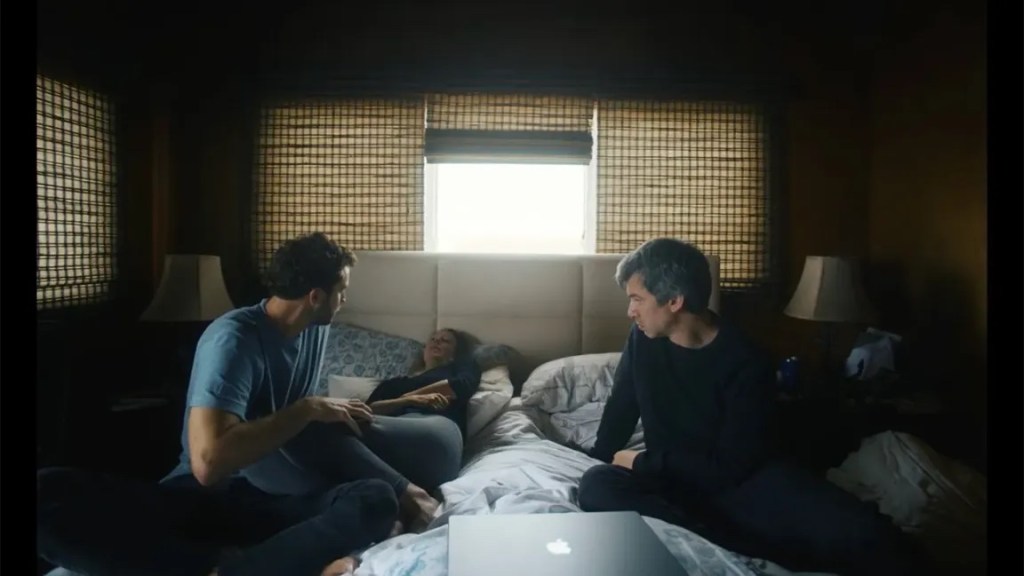
I need to talk about aspects of the filmmaking here that I don’t think I usually talk about when I talk about documentaries – namely the cinematography and score. David Bolen, who also shot Lance Oppenheim’s Primetime, filmed this and a lot of what I liked about the filmmaking there stands out here too. Most strikingly, the close-ups. Bolen traps Nathan, Elizabeth and Billy in these deeply uncomfortable, claustrophobic close-ups, and they add to the tension so effectively, and he also shoots the film in the cramped and boxy 1:33 Academy ratio, which also effectively adds to the sense of unease and claustrophobia.
Ari Balouzian composes the score, also returning from Primetime. This score is also quite similar to that one, in that it makes you feel like you’re watching a horror movie. It’s very sharp, intense and pointed and I’m actually listening to it while I’m writing this review. It’s gripping, unrelenting, and deeply memorable. And this is so interesting to me, because I feel like we never remember scores in documentaries. I also need to single out editor Adam Locke-Norton, because a three-hour-long documentary sounds like homework and he makes this feel like a psychological thriller disguised as a documentary. One where the audience is constantly on the edge of their seats, constantly bracing themselves for whatever crazy thing will happen next. That’s partly because Fielder and Oppenheim simply got a lot of great material to work with, but also because it’s organized in such a way that makes this one of the most exciting films I’ve seen all year.
It’s hard to talk about a film like this without really talking about it, but I hope I was able to effectively communicate what makes You Can See Everything so special. I really don’t want to overdo it with praise but this is probably one of the very best documentaries I’ve seen in my entire life. You may think you don’t want to spend three hours in a movie theater watching a documentary, but trust me, you do. It’s less of a straightforward documentary and more of a psychological horror film dressed up like a documentary. It’s a riveting, chilling and unforgettable experience and I think this could become the first documentary film that gets a Best Picture nomination at the Academy Awards. It should be, anyway.

