
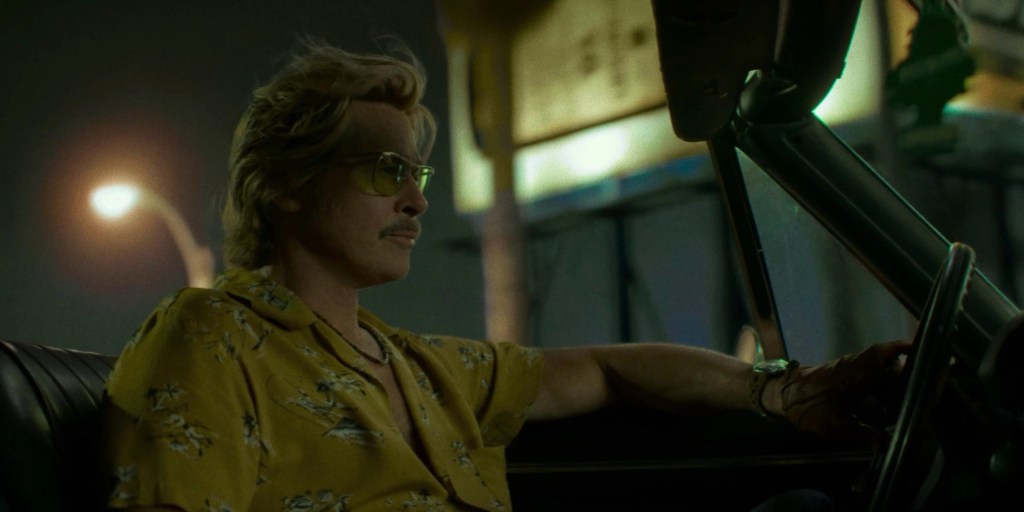
Director David Fincher, in my opinion, has kind of lost his way since he started working for Netflix. In the early 2010s, he gave us an incredible run of three of his best films – The Social Network (2010), The Girl with the Dragon Tattoo (2011) and Gone Girl (2014). Since then, again, in my opinion, he hasn’t really done anything that has come close to that level. Quentin Tarantino has long said he’s only wanted to direct ten films, which would make his next film his last. This project has changed shape and form over the last several years, and in collaborating with Fincher to direct his script for The Further Mis-Adventures of Cliff Booth, the sequel/spin-off to his Oscar-winning 2019 Once Upon a Time in Hollywood, he’s found a loophole. Now, Tarantino can make that final film, whenever he decides what he wants it to be, and also get to make that sequel he’s always wanted to make as well.
And I walked into the Cliff Booth screening fairly excited. I’m not the biggest Once Upon a Time in Hollywood fan, in my opinion It’s one of Tarantino’s weaker films. But there’s a lot I love about what Fincher and Tarantino do individually as filmmakers, so I was excited to see what it would look like when their styles merged and what they’d bring out in each other as a director/writer duo. And Netflix has apparently spent about $200 million on this and has been cagey about its rollout. Normally this would have premiered in Venice or Toronto this year, but as I write this review, not many people have actually seen the film. So, how did this long-delayed, long-anticipated, shrouded-in-mystery project turn out?
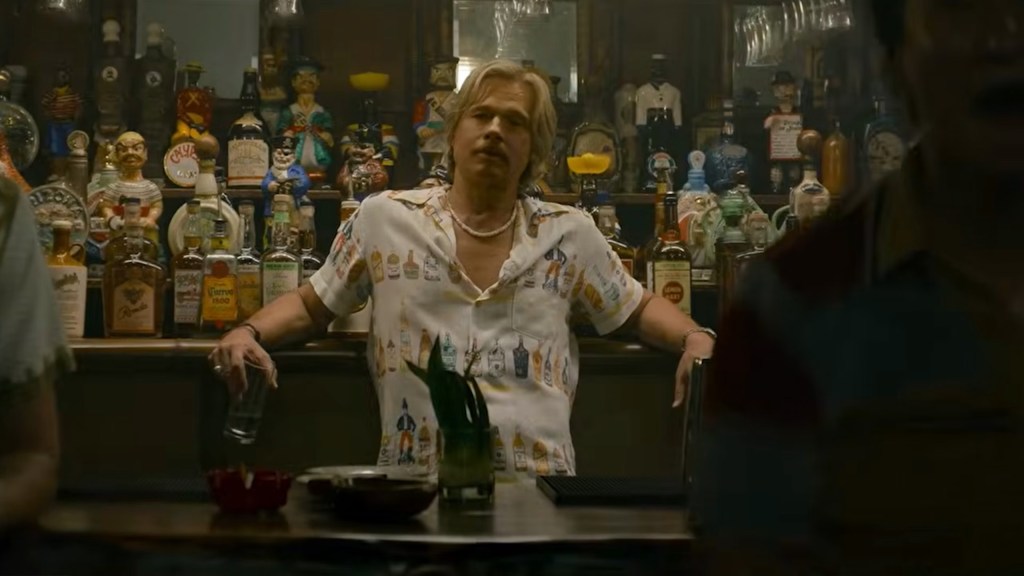
The year is 1977, and Cliff Booth (Brad Pitt) is no longer a stuntman. He’s working at the New Beverly Cinema (owned by Tarantino, by the way), he’s working at a dive bar, he’s doing a bunch of odd jobs, and occasionally he’s called upon by a studio executive to fix a problem. This week, he’s contacted by talent agent Karen Crosby (Elizabeth Debicki) for his assistance involving a situation with actor Charlie Peters (Scott Caan) and two mysterious gangsters (Matt Groove and JB Tadena).
The Further Mis-Adventures of Cliff Booth is about as aimless as its titular character, and that’s either going to be a problem for you or it isn’t. In a similar way to Once Upon a Time in Hollywood, this is kind of a loose, shaggy hangout movie. It’s light on plot, more of a vibe or an aesthetic than an actual movie. And like Once Upon a Time in Hollywood, it somehow becomes less interesting when the actual plot kicks in. It’s close to two and a half hours long and for me, it sure felt like it. It felt like all the pieces never really clicked into place. Everything about it is technically thrilling, the costume/production design, the cinematography, the score, the music supervision, etc. But I never felt myself become fully engrossed in the story this film was telling, and that became its biggest problem for me. While I can’t deny there’s a lot going on here stylistically that works beautifully, I’m also not sure this is going to work for everybody.
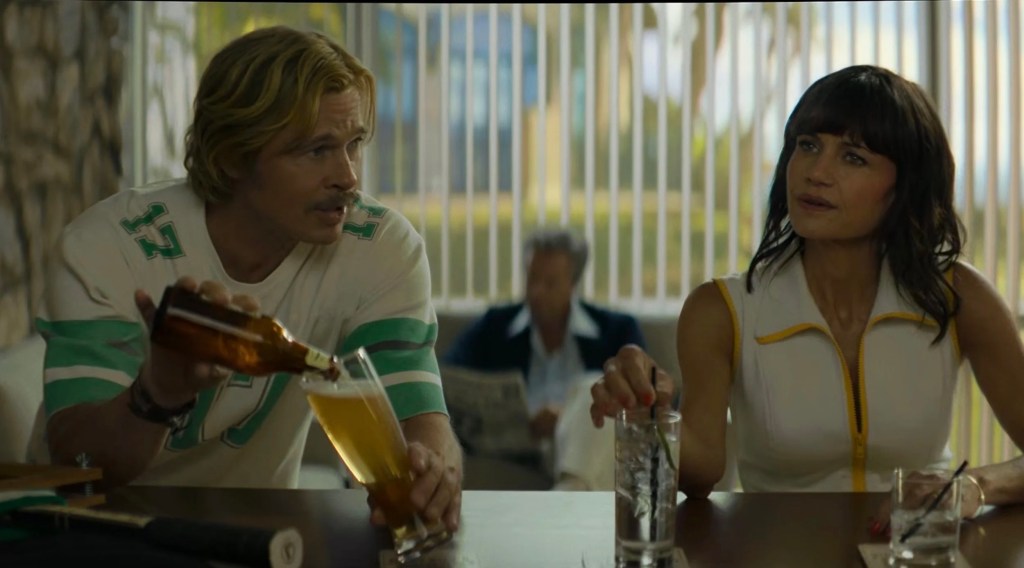
Brad Pitt is really going for it here, reprising the role that won him his acting Oscar. He’s giving you full Brad Pitt – he’s endlessly charismatic, even when we’re not really learning much more than we already know about this character. He still carries himself with that same infectious swagger he did in Hollywood. There’s not a lot of vulnerability or nuance to his performance, and even as we end this film, he’s still very much an enigmatic figure, but of course that’s what Fincher/Tarantino/Pitt are going for. I don’t know if this performance will be as widely lauded this time, because you can’t see something for the first time twice, but this is also probably the best performance Pitt has given since that 2019 film.
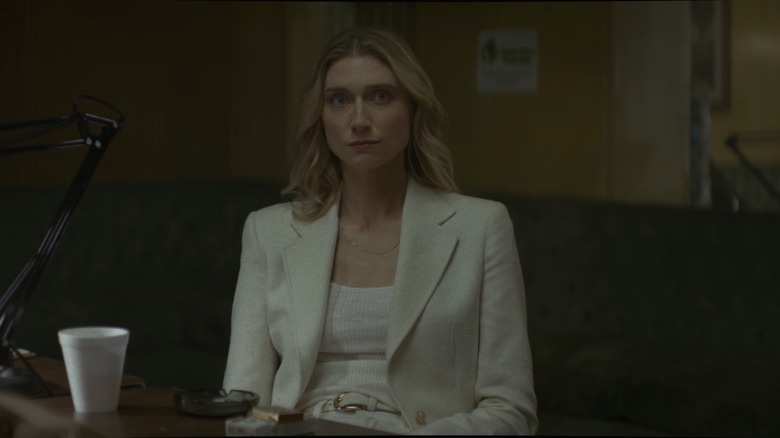
While Pitt is absolutely not phoning this performance in, he’s hardly the best thing this film has. The actor that stuck out to me most was Elizabeth Debicki, playing a talent agent who used to be a film critic, who Booth eventually pursues as a love interest. I will say the chemistry between Pitt and Debicki worked for me, despite the off-putting 25-plus-year age difference between the two actors. Debicki has this allure and sensuality to her presence that works very well with what Pitt is doing. One could argue it’s Debicki, not Pitt, who walks away with this movie.
In our supporting cast, we also have Scott Caan as Charlie, Karen’s client who is in need of Cliff’s help. He’s bringing a lot of comedy to the film, but I found his performance got old for me rather quickly because he’s largely doing the same thing over and over again. We’ve also got Yahya Abdul-Mateen II and Carla Gugino, who barely have anything to do. Peter Weller also shows up as Cliff’s father, and I’m sure fans of the ‘70s/’80s action movies where Tarantino often finds his inspiration, will be delighted to see him.
But this brings me to one of my central problems with this film. I was very excited to see the combination of Fincher and Tarantino’s styles, and what that would look like in this film. And this very much feels like a Quentin Tarantino movie, and if you told me Fincher actually had nothing to do with this project, I would believe you. He seems to step out of the way to let Tarantino’s script speak for itself, and this was so disappointing to me. There’s a slick glossiness to the style that I guess is also common in Fincher’s films, but it also very much looks and feels like a Tarantino movie. There’s even that insufferable bit of voiceover narration where Tarantino is telling you about a nonexistent TV show from the 1950s, echoing a bit of Once Upon a Time in Hollywood I found particularly self-indulgent and grating.
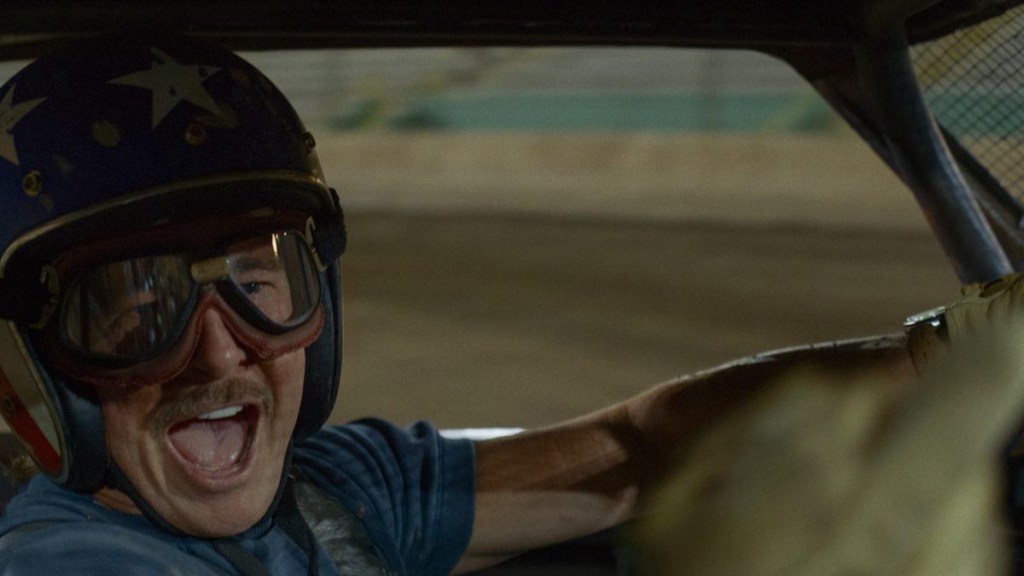
I keep coming back to the style because most of what I enjoyed about this film begins and ends there. Erik Messerschmidt, who has shot all of Fincher’s projects for Netflix, returns for this, and the film sure looks gorgeous from beginning to end. There’s a rich sense of time and place and lots of specificity to the locations. Composers Trent Reznor and Atticus Ross return for their sixth collaboration with Fincher, and their score is full of life and verve, but ultimately might be a little too much in certain moments. I’m sure awards season recognition will be paid to production designer Donald Graham Burt and costume designer Trish Summerville as well. The period detail in the locations is beautifully realized by Burt, and Summerville gives Debicki, in particular, plenty of great looks that make the most of her whole striking glamazon presence.
Now, why is Netflix so insistent on releasing Cliff Booth only in IMAX theaters for its short theatrical window before it heads to the streamer before Christmas? Well, I don’t really know, if I’m being honest. Netflix hosted the press screening at an IMAX theater, presumably wanting us to talk about the immersion of that experience. And like I’ve already said, the cinematography is splendid the entire way through, the film looks wonderful. But I’m not sure if I saw anything I saw here that really justifies the IMAX ticket. I think this will play fine at home on Netflix, but I also know those who are clamoring for this film will want to see it projected on the largest screen possible. I don’t begrudge anyone that experience, I’m just saying I had that experience and I was still underwhelmed.
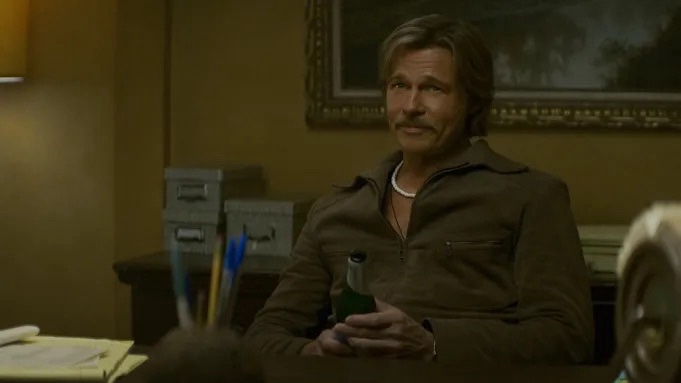
So, if it isn’t painfully clear by now, I wasn’t particularly won over by The Mis-Adventures of Cliff Booth. I found it rambling, meandering, unfocused and almost borderline incoherent at times. It never really amounts to something that justifies the production’s insane price tag, but also this collaboration between two filmmakers I love. I really wanted to be blown away by everything here, to be swept up in all of it, but most of the time I was just bored, often looking at my watch wondering when I could go home. And then the film aims to end in a kind of explosive way, but once we got to that ending it didn’t really feel like the rest of the film earned it. Fincher and Tarantino are still two filmmakers I have great admiration for, and I’m sure both careers still have many interesting places to go, but perhaps a second visit to Hollywood wasn’t one of them.

