
I’m a big fan of Suzanne Collins’ The Hunger Games book series, and shockingly, the movie adaptations have mostly been on their same level. I was put off slightly when Sunrise on the Reaping, the fifth book overall in her franchise, released in March 2025 with a release date for its adaptation already set for November 2026 by Lionsgate. This all felt a bit suspicious, like it reeked of cash-grab cynicism, or in Hunger Games terms, it felt very Capitol. But then I read Sunrise, and was very impressed by all it was doing. I decided to reread the book more recently, excited to recall some details I may have forgotten, or discover some I might have missed the first time around, before I walked into the movie. This reread emphasized some aspects of the book I was eagerly anticipating in the film. Certain scenes, character beats, and feelings I’d hoped the movie would’ve given me. And the Sunrise on the Reaping movie mostly gave me what I wanted. Mostly.
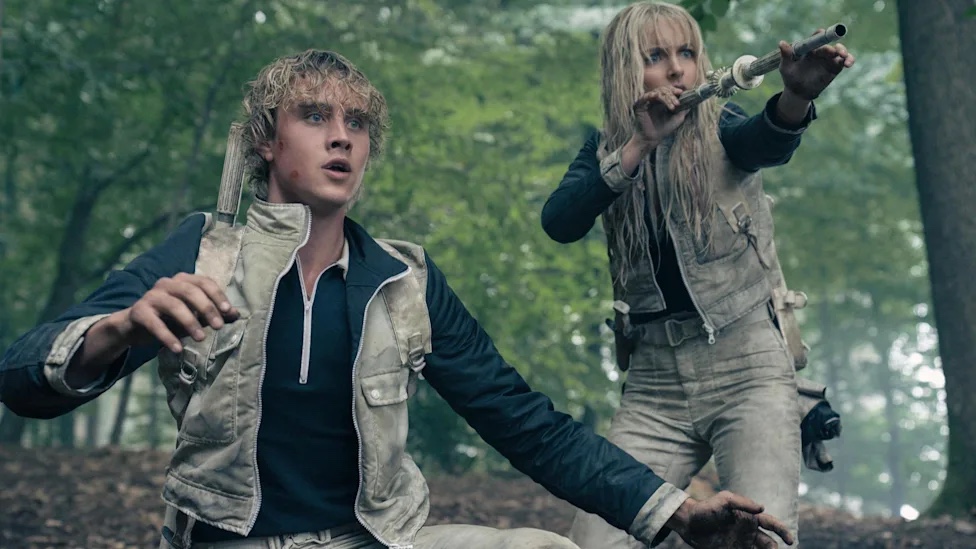
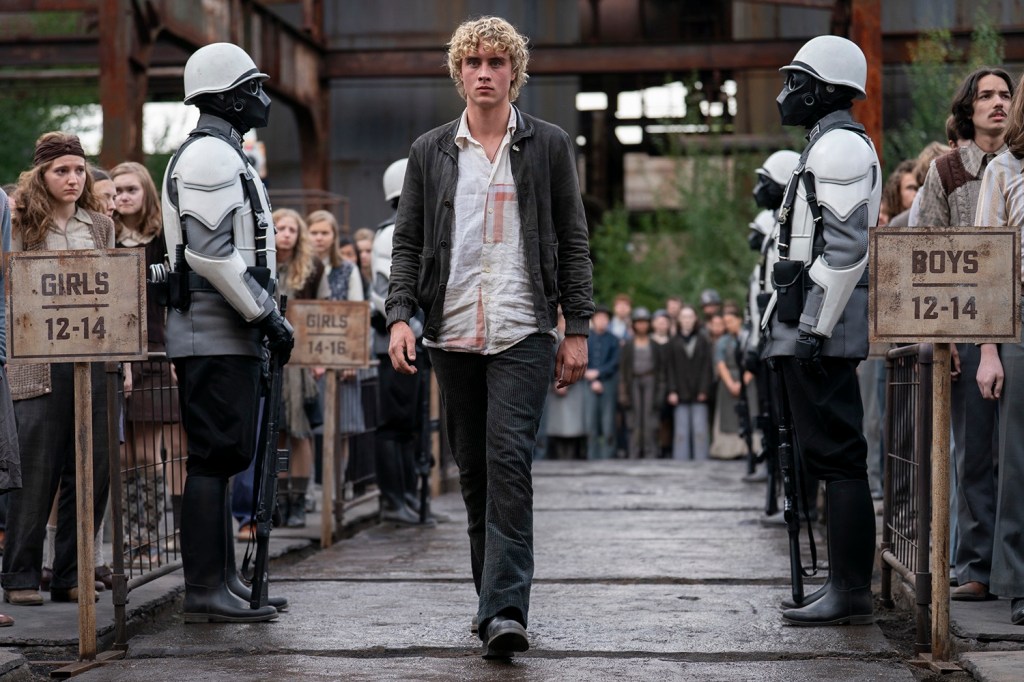
Years before he’d meet Katniss Everdeen, teenage Haymitch Abernathy (Joseph Zada) is living in Panem’s destitute District 12 with his mother and younger brother. He’s madly in love with Lenore Dove (Whitney Peak), and his birthday falls on the day of the reaping for the yearly Hunger Games. One year, through a series of increasingly unfortunate circumstances, Haymitch is chosen to participate in the Quarter Quell, the 50th Hunger Games. Haymitch must not only fight like hell to survive, he’s also determined to sabotage the Games to put an end to the cruelty and madness created by the Capitol and President Snow (Ralph Fiennes) once and for all.

The problem with prequels is that you already know where you’re going to end up, so it really has to be about the journey rather than the destination – less about the what, more about the how. It has to take a story where you know what you’re getting and make it compelling in new ways. I think Sunrise is doing this, and doing it quite well, but I could also understand the perspective that this series has pretty much said all it has to say at this point. I may not agree with it, but I understand it. Collins’ backstory of Haymitch is so rich, so emotionally devastating and compelling, and newcomer Joseph Zada is doing a lot of heavy lifting to sell you young Haymitch’s journey, that this film ultimately worked very well for me despite some flaws. And yes, there are flaws. I was hoping to come out of this movie with enthusiastic, rhapsodic praise. Instead I kept thinking about important moments from the book that were cut, payoffs that have no setup, and character moments that deserved more breathing room. I still liked the film quite a lot, but follow along, why don’t you, as I try to determine why this ultimately is not one of my favorite movies of the year.
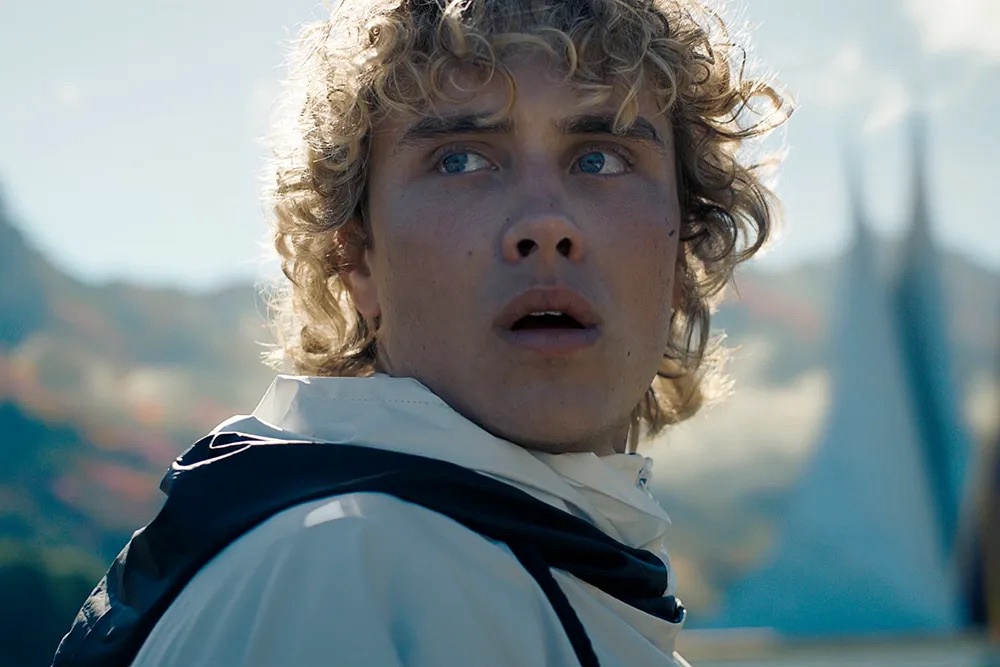
Joseph Zada, previously seen in the Australian queer coming of age drama Invisible Boys, and Netflix’s recent adaptation of East of Eden (both of which I still need to get around to watching), is a star, full stop, and I was not necessarily rooting for him. I really wanted Charlie Plummer to get this role, and it looked like he was going to for awhile, and I was annoyed when he didn’t. Zada is tasked with threading the needle of embodying the energy brought by Woody Harrelson in the previous films, but not falling into straight-up mimicry or imitation. And in my opinion, Zada does this remarkably well. He’s carrying this thing from beginning to end and he never cracks under that pressure. He’s got an undeniable charisma and a forceful screen presence that makes Haymitch riveting to follow, even when you know where he’s going to end up. Zada absolutely won me over in every moment, and his will be a name worth paying very close attention to.
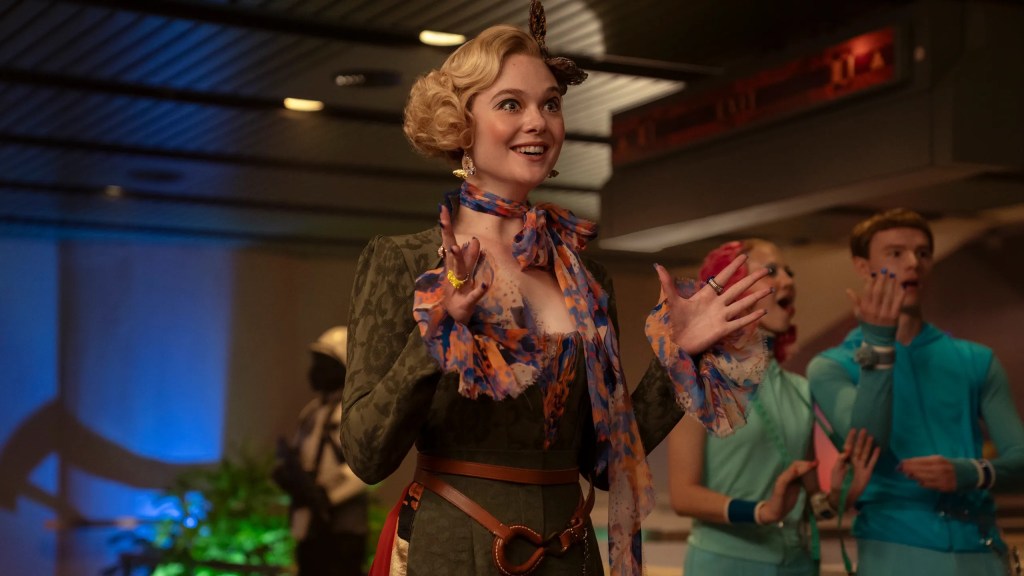
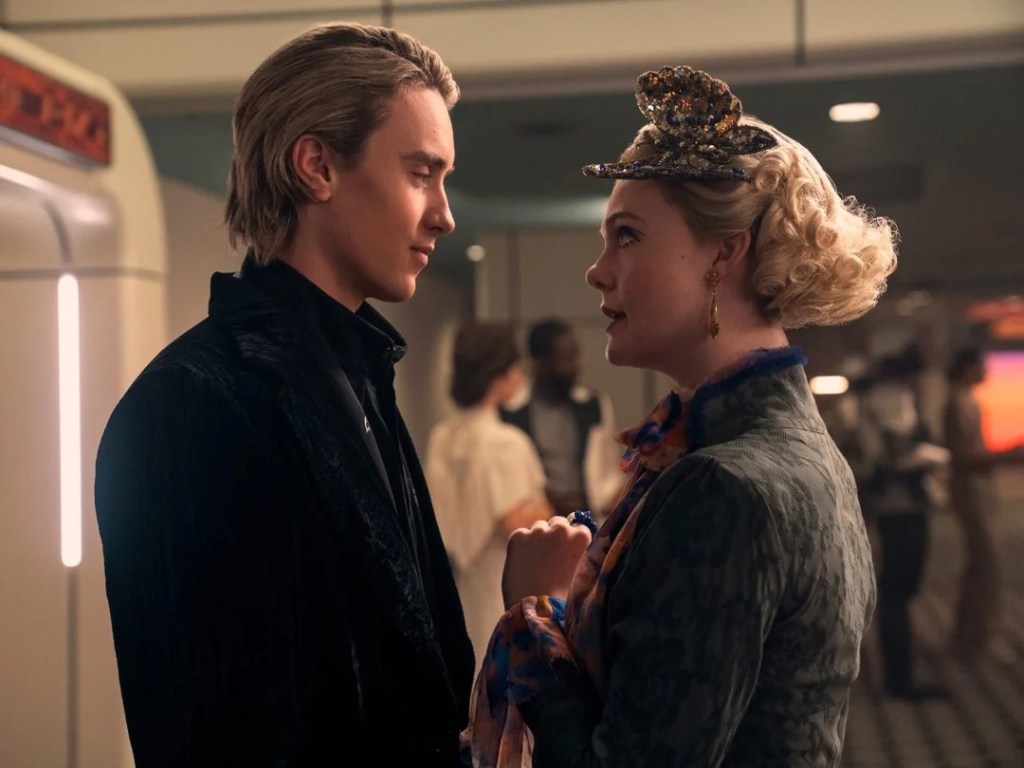
Unfortunately, almost every other actor in this movie is frustratingly underused, and it’s a shame because we have a murderer’s row of a supporting cast. We have Jesse Plemons playing Plutarch, a role previously played by Philip Seymour Hoffman, which seems almost too perfect, as Plemons has often been compared to Hoffman. He’s great, he did something kind of similar earlier this year in Digger. You could almost see an entire spin-off film about how Plutarch became the way he is. Same goes for Elle Fanning as a younger Effie Trinket. She’s going for SOME Elizabeth Banks energy, but she’s never overdoing it. She has just the right presence for this, and she’s also playing it like Effie has a rich, complicated backstory that would be exciting to follow in a prequel of her own.
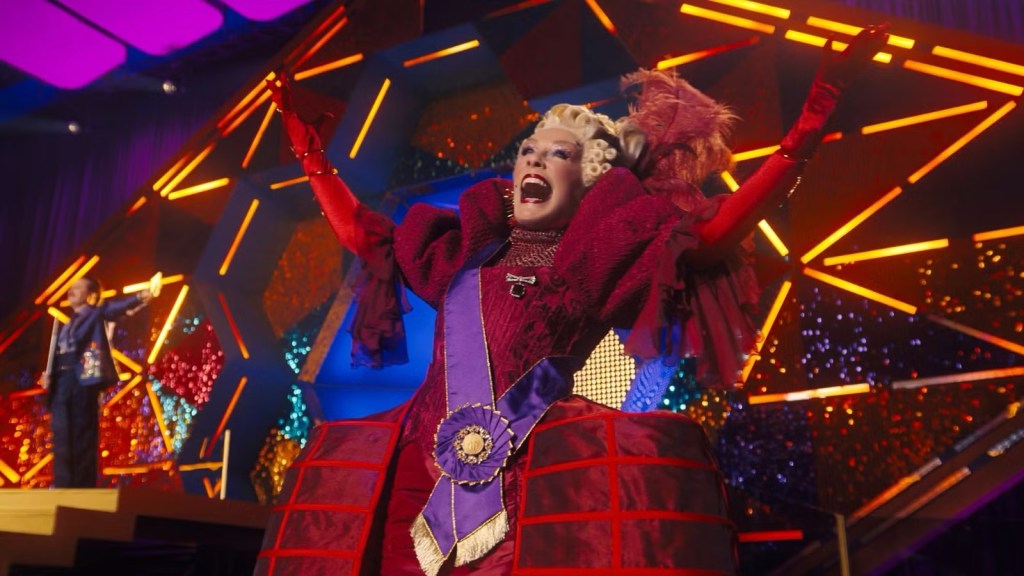
Kieran Culkin stars as TV host Caesar Flickerman, a role previously played by Stanley Tucci and Jason Schwartzman. He’s great, he’s got just the right manic, menacing energy this character needs. Kelvin Harrison Jr. is playing younger Beetee, and his performance is so similar to Jeffrey Wright’s, it’s almost distracting. Ralph Fiennes is President Snow, and he’s got the prerequisite terrifying presence, but I think Fiennes doesn’t really have a lot to do, and he looks about the same age as Donald Sutherland does in the original movies, set 20+ years later, and that’s a problem. Glenn Close is giving full camp as Drusilla, a new character to this installment. She’s got her face stretched back in a crazy way and she’s wearing the most insane costumes, and it’s clear she’s having a ball with this.
Maya Hawke stars as Wiress, and Lili Taylor appears as Mags, two characters we know from previous installments, and both have maybe five minutes of screentime. And they’re both expertly cast, so this feels like a waste. Billy Porter shows up as a Capitol stylist, and he’s got the perfect presence for this role as well, and it’s a shame he’s such an afterthought. Mckenna Grace stars as Maysilee, one of Haymitch’s fellow District 12 tributes. She’s complicated, feisty and brash, and Grace is one of the few members of this supporting cast who doesn’t feel short-changed. She has some moments that are quite memorable, even though a big book moment involving her character is frustratingly omitted from the final act. And Whitney Peak, starring as Haymitch’s true love, makes the most of her limited screentime and gives the relationship at the heart of this story the emotional power it needs.
There were a few aspects of the film I was consistently thrilled by, and had no issues with, namely the production and costume design. Uli Hanisch is our production designer, who crafts this arena to look like something out of Ari Aster’s Midsommar. Everything is idyllic, beautiful and aesthetically pleasing, but everything is also trying to murder you. There are a lot of flowers and butterflies and charming woodland creatures and they all want you dead. It’s gorgeous and inviting, but horrifying, and that feels like a tricky balance to get right.
Bina Daigeler is one of Pedro Almodóvar’s frequent costume designers, and that’s absolutely evident in her work here. Everything the Capitol characters wear is intentionally gaudy and overdone, in ways Daigeler is clearly delighting in. Everything Glenn Close wears is insane, everything Elle Fanning wears is maximalist and intentionally way too much, and it’s all working. Cinematographer Jo Willems, who has shot the last several Hunger Games movies, returns here. It’s vibrant and colorful and especially striking through a number of dazzling set pieces. And the way earlier moments have a lot of visual warmth, is beautifully contrasted with later sequences where the bleakness of the moment takes center stage. James Newton Howard is once again composing the score and it’s great, he’s giving you all you’d expect from a Hunger Games score.
I should mention director Francis Lawrence, who is returning after having directed all of the Hunger Games films except for the first. He’s got such a clear vision of what this world is, and having him continue to return gives the franchise groundedness and consistency. Screenwriter Billy Ray, who cowrote the first film, returns with Michael Lesslie, who cowrote the previous entry The Ballad of Songbirds and Snakes. And they take the challenge of adapting this 400-page book, which has many details and nuances, and mostly get it right. I’m annoyed by a number of cuts from the source material, but I understand certain sacrifices have to be made to keep this thing under three hours. For what it’s worth though, I’d absolutely watch the rumored four-hour-long first cut of this film.
One of the main reasons I’ve always liked The Hunger Games as a franchise is that it’s ostensibly a franchise for teenagers that’s teaching them about propaganda, authoritarianism and government corruption. A franchise that’s encouraging younger people to think critically about the world they’re living in, that’s telling them to recognize injustice when they see it. And I’ve seen some say this franchise is kind of making the same points over and over again, and I have to disagree. Considering the way things are in 2026, I think these films are as essential as ever. There’s a plot point about the TV producers of the Games editing footage to omit narratives the Capitol doesn’t want its citizens to see, and creating one that paints events in exactly the way the evil people in charge want them to be depicted. This feels frighteningly familiar to what I’ve witnessed in the changing media landscape over the past two years. And as long as these books/movies are reaching younger viewers, encouraging them to think critically and fight the good fight, I think they very much have a reason to exist.
Ultimately, I’m mildly conflicted when it comes to this sixth Hunger Games film. I think a great deal of it works, and works brilliantly, but the aspects that don’t bring down the experience for me a bit. However, there still isn’t a single bad, or even mediocre Hunger Games film of the bunch and that’s undeniably impressive as far as big studio tentpole franchises go. Between Joseph Zada’s star-making performance, the lush production and costume design, and the powerful and emotionally devastating thrills the story is giving you from beginning to end, I would say Sunrise on the Reaping gives you plenty of compelling reasons to once again return to Panem. But it’s also possible reading the book again right before seeing this film left me expecting a little too much.

