
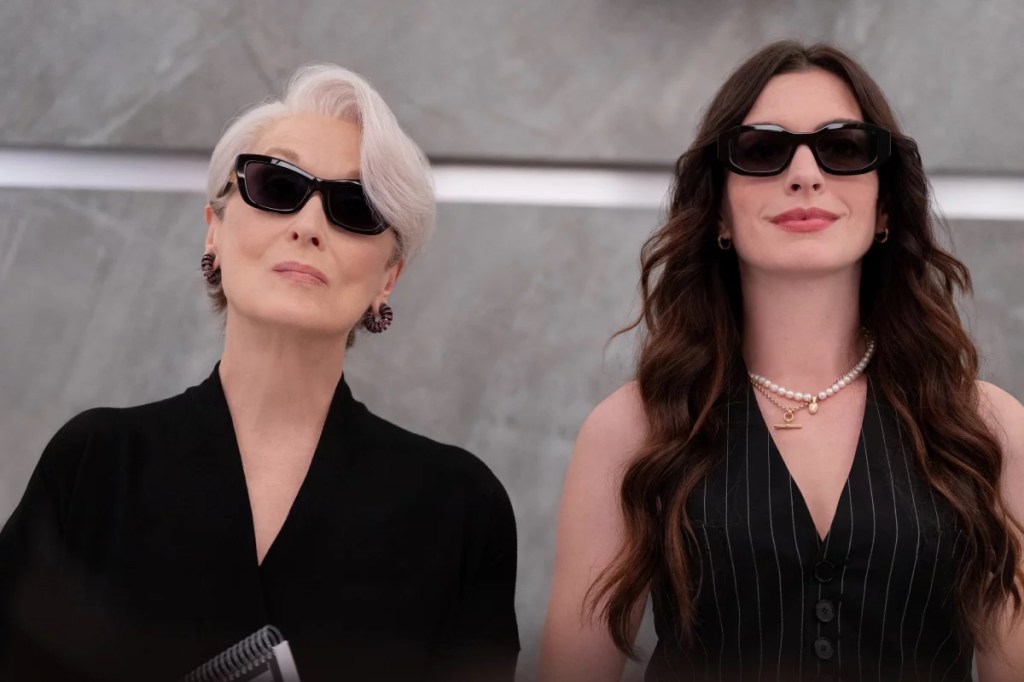
I’d always thought of David Frankel’s 2006 film The Devil Wears Prada as the kind of film that wasn’t wildly popular when it originally released back in summer 2006, but people grew to love and appreciate as the years went by. Of course, I was remembering this wrong. The Devil Wears Prada was a huge hit in 2006, grossing over $300 million worldwide and earning star Meryl Streep her fourteenth Oscar nomination. I still maintain she should have won her third Oscar for that 2006 film rather than The Iron Lady, but I digress. The legacy sequel is often a beleaguered and thankless endeavor, we’ve learned this to be indisputably true with every Jurassic film released in the last decade. If a ‘legacyquel’ is slavishly recreating the beats of the original and leaning heavily into fan service, the experience can feel cheap and ultimately unsatisfying. But not always!
Before I start talking about why returning director David Frankel’s The Devil Wears Prada 2 did very much work for me, a quick disclaimer. There’s no real way I can be objective about this review. The original 2006 film is near and dear to my heart for a multitude of reasons. I first saw it in a movie theater when I was 13 years old, I remember the experience of going to see it vividly, and I’ve since seen the film a hundred times. I’ve read Lauren Weisberger’s 2003 book, and its sequels. I went to Chicago back in summer 2022 to see the pre-Broadway tryout for the (unfortunately dreadful) stage musical adaptation with music by Elton John. That musical has never made it to Broadway, by the way, and in my opinion there are a lot of reasons why.
But, naturally I walked into my showtime of The Devil Wears Prada 2 with high hopes, but also a lot of trepidation. Almost always, when I have this much emotionally invested in a movie, the movie in question finds some way of disappointing me. And what we have with The Devil Wears Prada 2 is a beautifully made follow-up to a beloved film that gives the viewer the fan service they might want, but also refuses to keep its characters in a 2006 state of mind.
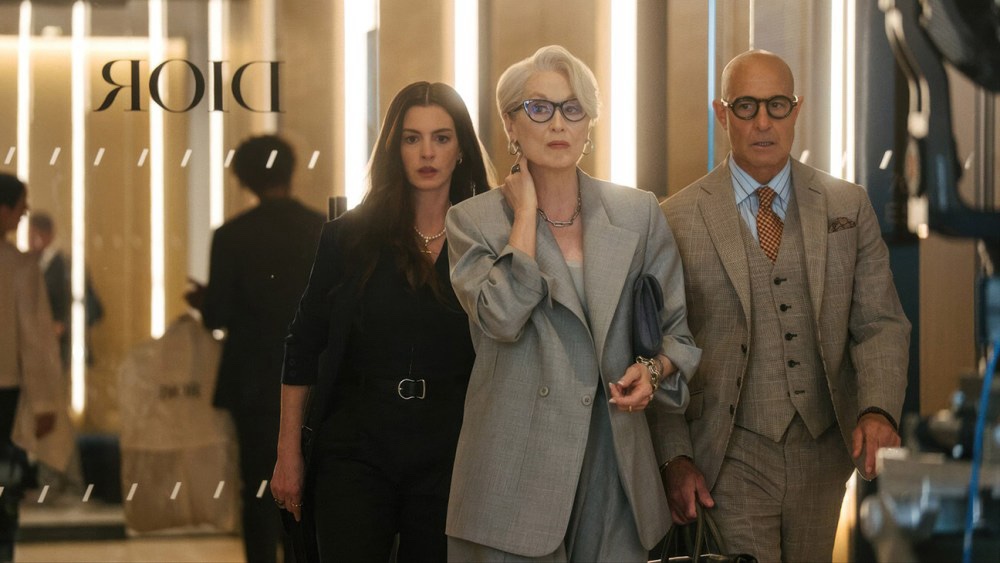
20 years after the events of the first film, Andy Sachs (Anne Hathaway) is an award-winning journalist who has been everywhere and done everything. When the publication she works for unexpectedly shutters, she’s suddenly summoned back to her old stomping grounds of Runway Magazine, where its iconic editor in chief Miranda Priestly (Meryl Streep) is dealing with her latest crisis. To restore their credibility, Miranda and Andy must work together once again, with the help of their old colleague Emily (Emily Blunt), who now is in a totally different position as one of the advertisers Runway must cater to, and also alongside Miranda’s longtime right-hand man Nigel (Stanley Tucci).
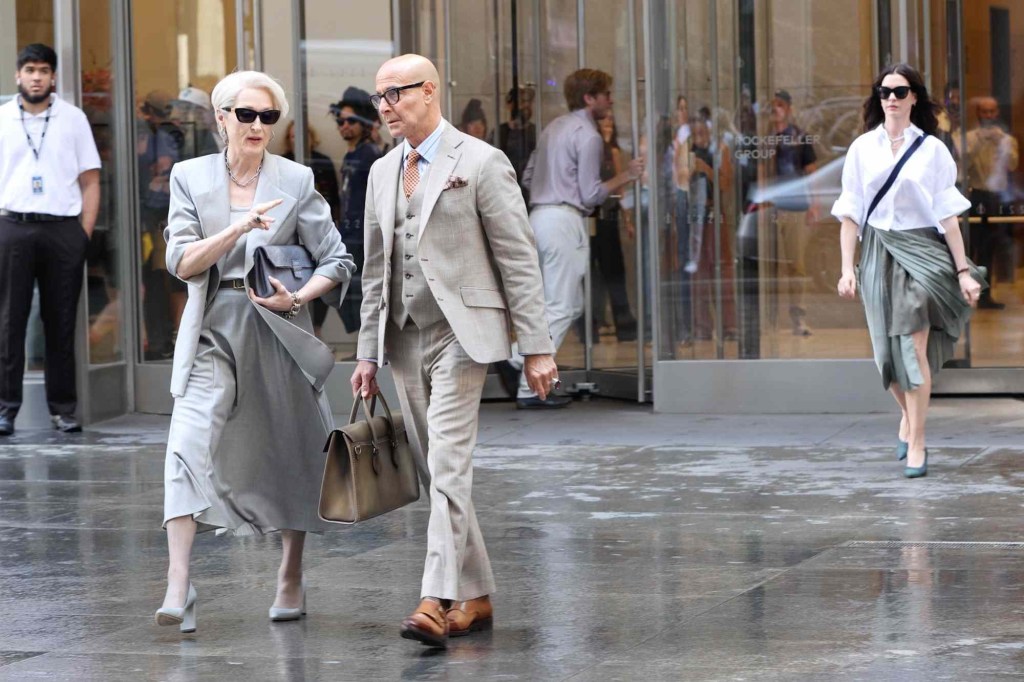
With any sequel I’m eagerly anticipating, there’s always the fear that some disaster would predictably occur and that would ruin my experience and potentially even tarnish my memories of the original film. A great deal of the original cast and creative team of the original The Devil Wears Prada returns for this long-anticipated sequel, and it’s clear from the outset there was no secret intention of blowing this franchise up from the inside. It’s also not trying to make you look at the original film in a different way. Screenwriter Aline Brosh McKenna somehow achieves the perfect balance of creating the perfect legacy sequel – one that plays the greatest hits, gives you lots of winks and nods to the original, but also distinctly does not feel like the same movie, one that exists very much at this very moment, and also feels like it could age just as well as its 20-year-old predecessor.
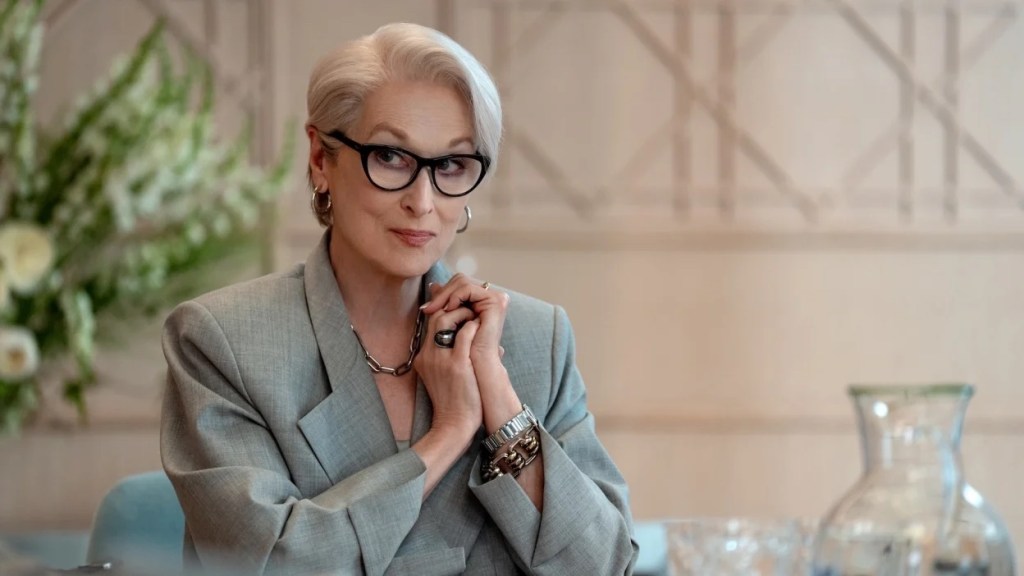
Meryl Streep, who famously does not do sequels, is actually in this one from beginning to end, and not doing the thing that Mamma Mia! Here We Go Again did where the advertising suggests she’s a returning star, only to blindside the viewer when they get to the theater and learn two minutes into the film that her character is already dead and will only appear in flashbacks. None of that nonsense is happening here, and it should not be a surprise that Streep has not missed a beat since 2006. Miranda is given more depth this time, and I can see viewers misreading that as the character having gone soft, but I see it a different way. Overall, this is a film about the rapidly changing media landscape, and Miranda may be the same person she was in 2006, even if the world around her has changed drastically. When Miranda and Andy initially reunite, she witheringly asks Andy “do I know you?”, and it’s clear status and power are still everything to her. She still delivers the most soul-crushing one-liners while never once raising her voice. The new film gives Miranda a much more detailed character arc than she had last time, and don’t be surprised if you see this role earning Streep her 22nd(!) Oscar nomination.
Anne Hathaway’s Andy is still the audience conduit into this glossy, decadent, high-stakes world, and she remains an endlessly captivating presence to follow throughout. One, it seems she hasn’t aged a day in 20 years (none of the main four seem to have), but also she plays Andy’s evolution in more subtle ways than I was expecting. It almost seems like Andy hasn’t changed very much at all, and is still the awkward, bumbling naif we met in 2006. It’s revealed in small ways over the runtime that she’s hardened but she’s still the same wide-eyed optimist at her core. Her character is faced with some difficult dilemmas this time around, and it’s fascinating to watch her navigate all of it. And Hathaway still has wonderful chemistry with her three co-leads, and more than anything it’s a joy to see all of them back together again.
Emily Blunt’s character seems to have changed more than anyone else. She’s working for Dior, which makes her an advertiser, and Miranda and Andy must cater to her now. This shifts the power dynamics and gives Blunt a lot of fun material to work with. And Stanley Tucci is just an utter joy to watch in every moment. It might have been nice to get a better idea of what Nigel’s internal life is like. He clearly lives the job and does not bring his own drama into anything, which is the same way his character functioned in the last film, however I would’ve liked a little more from that character. But I admit that’s mainly because of all Tucci is doing with every scene he’s given.
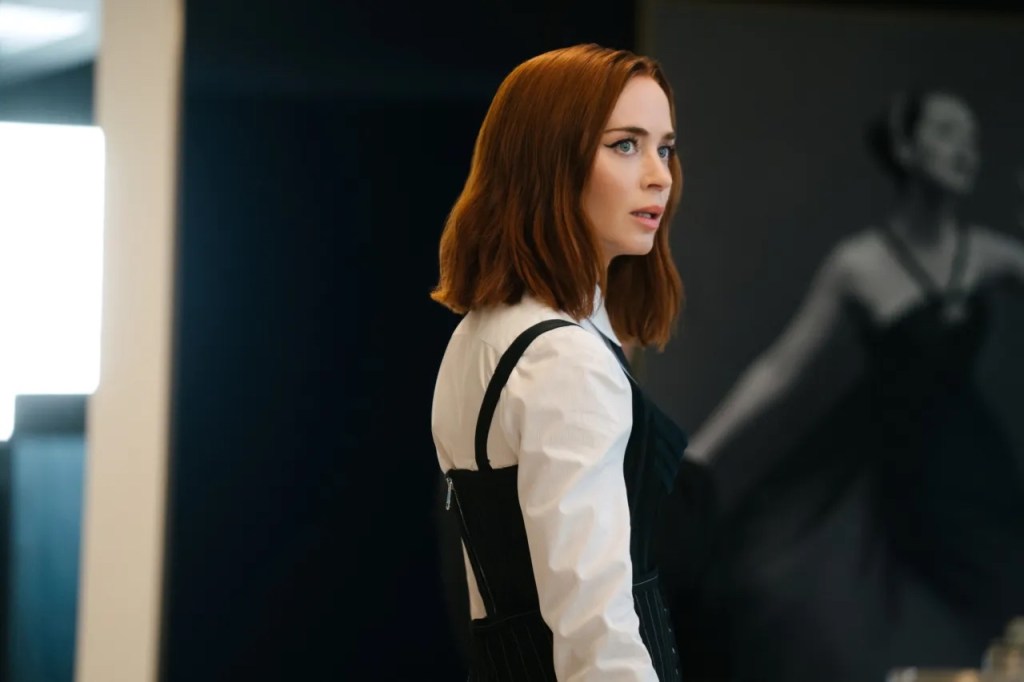
In our new cast, we have Justin Theroux as Benji, a shallow Jeff Bezos-coded Silicon Valley billionaire who Emily cynically connects herself to romantically. We also have Kenneth Branagh as Miranda’s husband, and he’s got almost nothing to do. We have Bridgerton’s Simone Ashley as Amari, Miranda’s current assistant, and comedian Caleb Hearon as her new second assistant. Both are given some very solid comedic moments. Lucy Liu appears as Sasha, the ex-wife of Theroux’s character who is profiled by Runway. The Office’s BJ Novak, Maybe Happy Ending’s Helen J. Shen and Crazy Ex Girlfriend’s Rachel Bloom all appear in memorable smaller roles. Tracie Thoms also reprises her role from the original as Andy’s best friend Lily. And there are plenty of delicious cameos I wouldn’t dare spoil.
At Runway Magazine, aesthetics are everything and they still are in The Devil Wears Prada 2, but everything is a little different. Famed Sex and the City costume designer Patricia Field does not return for this sequel, but Molly Rogers, who also worked on the first film, does. And I may talk a lot of trash about fan service in movies, and maybe it’s just different when the fan being serviced is me. There’s another fashion montage set to Madonna’s Vogue, and there’s specific callbacks in the costume design that filled me with joy. Jess Gonchor, the production designer from the first film, is also returning and the halls of Runway look the same in a lot of ways, but in a more muted way, echoing the film’s ongoing theme of corporate restructuring and budget cuts, also emphasizing how a pivotal place from your past can never be all you remember it to be. Composer Theodore Shapiro returns to compose the score, and cinematographer Florian Ballhaus also returns behind the camera. Not a lot stands out about the score or cinematography, but I love that Frankel re-assembled as many people from the original production as possible.
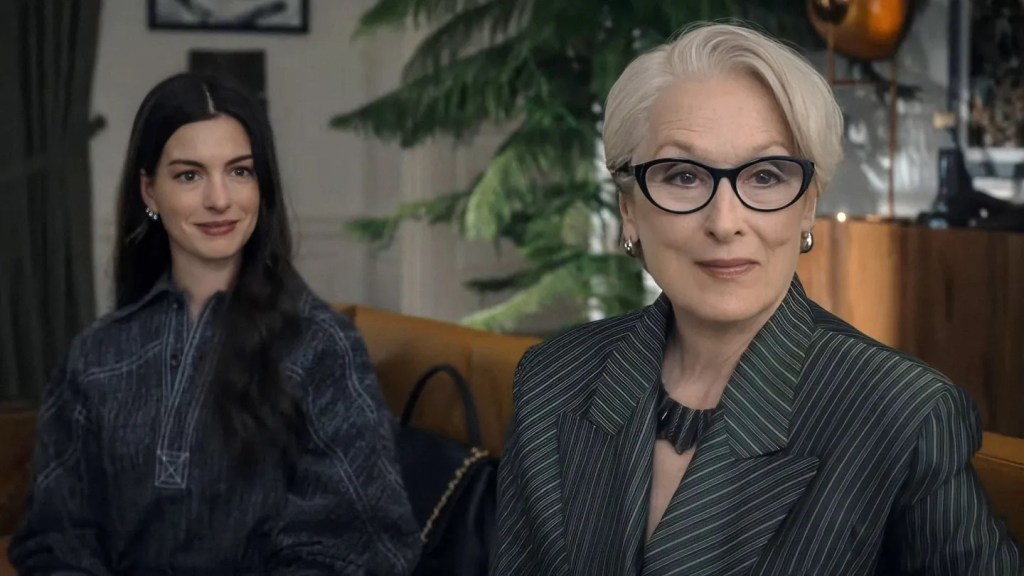
It’s admirable for screenwriter Aline Brosh McKenna to not want to simply write the same film she wrote 20 years ago. She’s grown remarkably as a writer since then (go stream her iconic series Crazy Ex Girlfriend from the mid-2010s for proof), and that’s entirely evident in all she must juggle with this screenplay. This is a nostalgia bait legacyquel that exists in an entirely different world than the 2006 original. The Devil Wears Prada 2 is secretly a film about the death of journalism, and all the ways the media landscape has changed in the past 20 years, and none of them are positive. And it’s ironic and kind of depressing that we’re getting a film about corporate restructuring and budget cuts, and most importantly media consolidation, from 20th Century Studios, now a division of the Walt Disney Company. Even Miranda must confront her place in the ever-changing world she helped shape, and how much longer she should stick around.
All of that sounds like it would be an undisputed bummer rather than a four-quadrant studio blockbuster poised to kick off the summer movie season, but the film doesn’t let itself wallow. The script takes these more somber themes seriously, but it never feels like a dirge. There’s a lot of melancholy to the proceedings, but also a lot of hope. Aline Brosh McKenna handles the tonal balance of that beautifully. Director David Frankel is an unshowy filmmaker, and seems to kind of disappear behind the camera, and let the script and the actors do most of the work, but not for nothing, he always surrounds himself with the right people for the job.
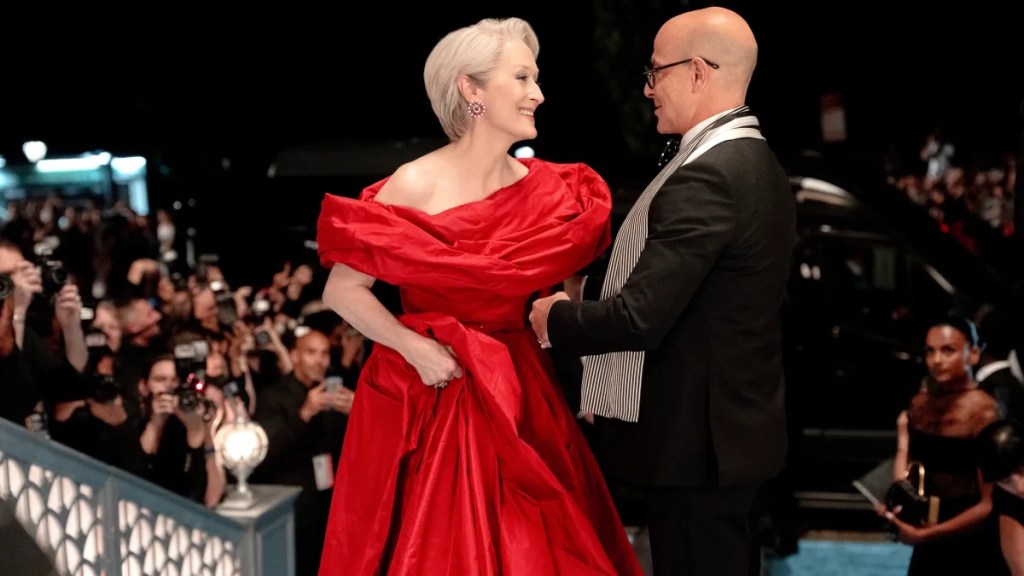
As an enthusiastic fan of the 2006 original, The Devil Wears Prada 2 is about everything I possibly could have wanted from a legacy sequel. It’s full of nods and references, but they somehow don’t feel hacky or shoehorned in, and the element of nostalgia is never the most important thing going on here. This is a film that’s honest about the world in which we find ourselves, even when it’s clear things are bad and there are few signs of anything getting better. It’s ultimately optimistic, because even after all that’s happened to them, the film leaves all of its characters in a better place than the original did. But ultimately, it’s a glitzy, glossy, funny, emotional and deliriously entertaining sequel that against all odds feels important and necessary. It gives each member of its central quartet fantastic material to work with, and watching them together again is more than worth the price of a movie ticket. As it turns out, nostalgia bait cash grabs don’t always have to be terrible.
 Salt Lake Film Review