

Director Luca Guadagnino has two films competing against each other during this year’s Oscar season. They could not be more different from each other. In April, MGM released Challengers, which at that point in the year, and for months following that, was my favorite film of 2024. Today’s film is Queer, an adaptation of the 1985 William S. Burroughs novel of the same name. If it were not for the WGA and SAG-Aftra strikes that occurred in 2023, these films would be competing in different awards seasons. I’m predisposed to enjoy anything Guadagnino makes, as it is my opinion he has not made a bad film yet.
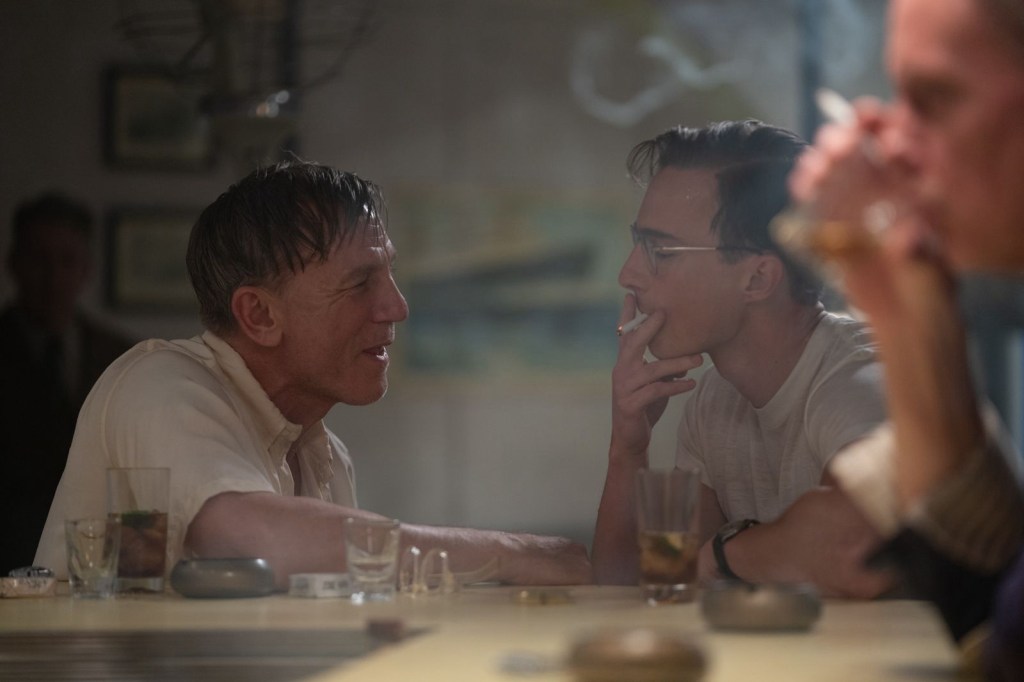
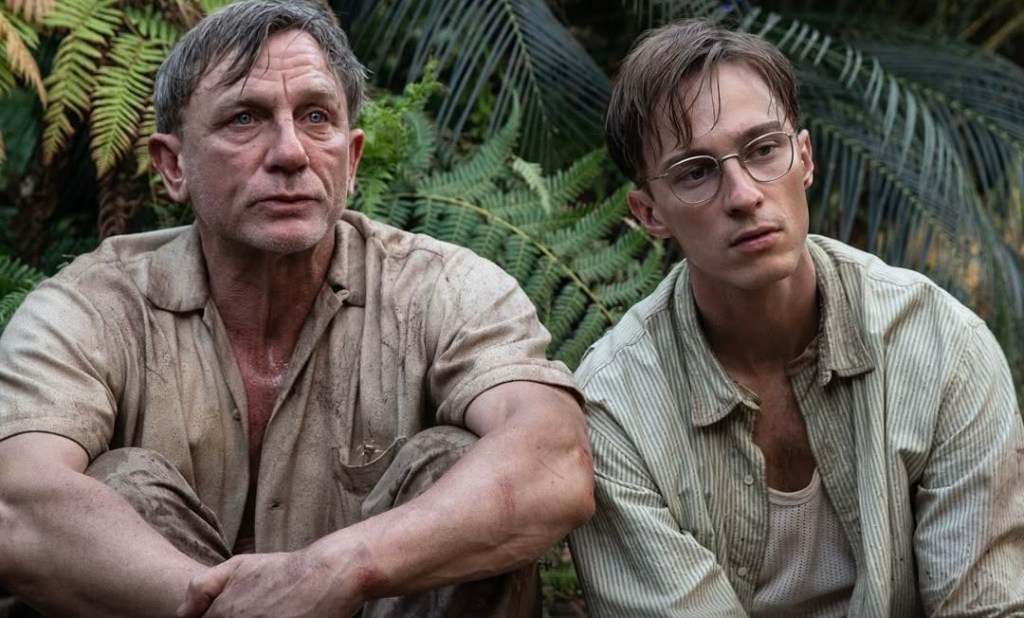
Queer opens on William Lee (Daniel Craig), an American expat living in Mexico City in the 1950s. He has found a small community for himself, full of queer individuals who have lived in the shadows in the lives that have led them to Mexico City. William hangs out in bars, drowns his sorrows in drink and drug, and has meaningless flings with much younger men. He meets and begins to become infatuated with the much younger and mysterious Allerton (Drew Starkey), who represents the kind of person William wishes he could have been. The two embark on a journey to South America, where they seek out a doctor (Lesley Manville) who might be able to provide them with a drug that might lead William on a journey of self actualization.

Queer is a film that forces you to meet it on its level. The pacing is languid, the characters are all enigmatic and it’s much less about what happens in this story, and more so about what it means to the people we’re following. This is a deeply felt and emotionally powerful story, but it’s also one where I didn’t really grasp onto it until after I was out of the theater and was driving home. I had to sit with what I saw and take some time to think about what it all meant. And I love it when a movie can do this. So often, a movie is telling you exactly how to feel about everything when you’re watching it, and there is so much moral and narrative gray area in Queer, and so much emotional murkiness, and if that kind of challenging film is something that excites you, you’ll find a lot to appreciate here.
I have not seen Daniel Craig give a performance like this in his entire career, and from the James Bond films to the Knives Out films, to everything he’s done in between, he’s never played a character like this. And Craig disappears into this character in a way I found very exciting. The level of commitment in this performance is astounding, and even though he’s an actor I’ve always liked, I never knew he had this kind of thing in his paintbox. His chemistry with Drew Starkey is captivating. I have no idea who Drew Starkey is or where he came from, but he’s a star. To be the younger, close-to-unknown actor paired up against a full-fledged movie star, and being able to meet his performance and challenge it every step of the way, is a remarkable feat. Starkey’s performance is mesmerizing, and you won’t be able to take your eyes off him for the entire duration.
We have some notable supporting performances here as well. A near-unrecognizable Jason Schwartzman appears as a friend of William’s who he often talks to in the bar where these men gather. Lesley Manville, also unrecognizable, shows up in the third act as the mysterious Dr. Cotter, and she’s a performer who can do just about anything and she’s giving this character full camp. I very much enjoyed what she brought to the trippy third act.
Much of the team Guadagnino worked with in Challengers, reunites with him here. Justin Kuritzkes wrote the screenplay for both films, and Queer seems like a more challenging feat, since it’s not just an adaptation, but an adaptation of a William S. Burroughs novel, many of which have been deemed un-adaptable. Guadagnino’s frequent cinematographer Sayombhu Mukdeeprom shot this, and it has an entirely different look from any of his collaborations with Guadagnino prior. Trent Reznor and Atticus Ross are also returning to compose the score, and it sounds nothing like their instant-classic Challengers score.
The plot of Queer might not seem like much when you’re watching it. What we learn about these characters and what’s happening to them is much more internal than external, and we only learn things about them little by little. What this story is more than anything, I think, is a film about longing, desperation and regret. It’s a film about the closet and how it hindered the lives of many queer individuals, not only in this time period, but even in the present day. It’s a film about the desire for human connection and the devastation of unrealized dreams. It’s a haunting and surrealistic meditation on loneliness and definitely a film that will stick with you for awhile after you see it.
Like I said, I wasn’t sure how to feel about Queer when the house lights went up. I had to give myself a couple days before I could properly collect my thoughts in this review. But I love it when a film doesn’t give you easy answers and makes you do the work of interpreting how you feel about everything going on. So many aspects of these characters and the plot that surrounds them are left up to your own interpretation and isn’t it amazing when a filmmaker trusts that his audience is smart enough to get to these places on their own?
Queer further cements Luca Guadagnino’s cinematic legacy and I hope he never stops making movies like this. Movies that are felt viscerally, movies that leave you with something to talk and think about after, movies that have the ability to challenge your perspective and make you rethink everything you thought before you walked into the theater. I love when film can have this effect on its audience, and that’s why I think you need to see Queer in a theater. See it with a friend or a loved one, and then talk about it after. It’s a crowded time of year, but this is absolutely worth the theatrical experience.
 Salt Lake Film Review