
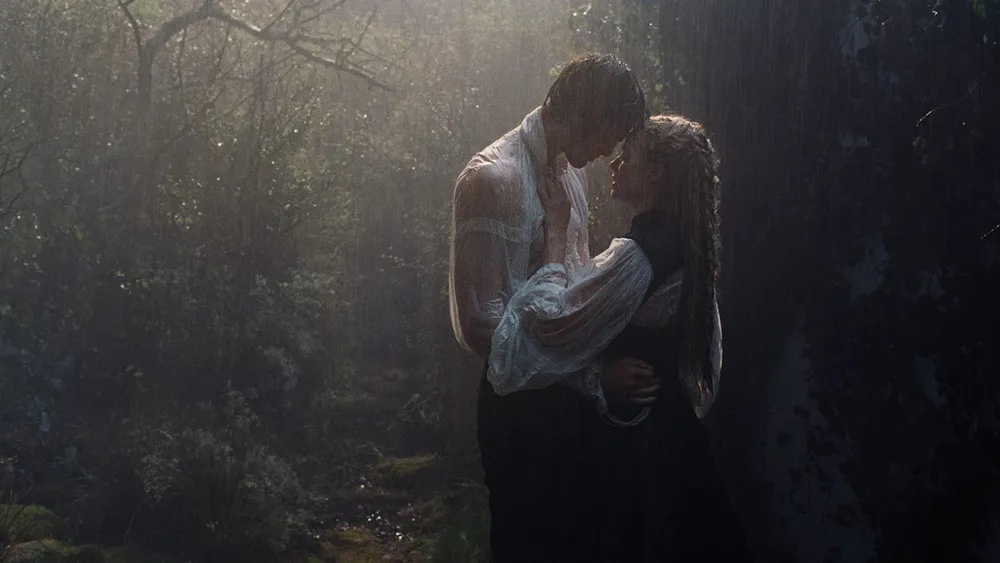
Emily Brontë’s 1847 novel Wuthering Heights has been adapted about a million times. It’s the classic novel you read in your high school literature class, and if you’re anything like me, you’ve completely forgotten about it by now. And I suppose I could’ve reread the novel or watched one of the many adaptations in the last couple weeks, but I didn’t. As someone who’s very much enjoyed writer/director Emerald Fennell’s previous two films, Promising Young Woman and Saltburn, I was intrigued by the idea of Fennell adapting a classic piece of literature and putting her own daring spin on it. You couldn’t find two more appealing actors working today than Margot Robbie and Jacob Elordi. The advertising effectively sold this as a sexy, singularly unique experience, complete with a soundtrack full of original Charli xcx songs. Due to all of this, I was eagerly anticipating the film. So why did Emerald Fennell’s Wuthering Heights leave me with such a distinct and distanced shoulder shrug?
I probably don’t need to write a Wuthering Heights plot synopsis but I’m going to anyway. Cathy (Robbie) and Heathcliff (Elordi) have known each other since they were children. Cathy’s father (Martin Clunes) took him in and they’ve basically been in love from a very young age, although class and status has always separated them. She decides to make the safe choice of marrying the wealthy Edgar (Shazad Latif), and Heathcliff disappears. Once he returns five years later after Cathy has settled into a life entirely separate from him, things become complicated.
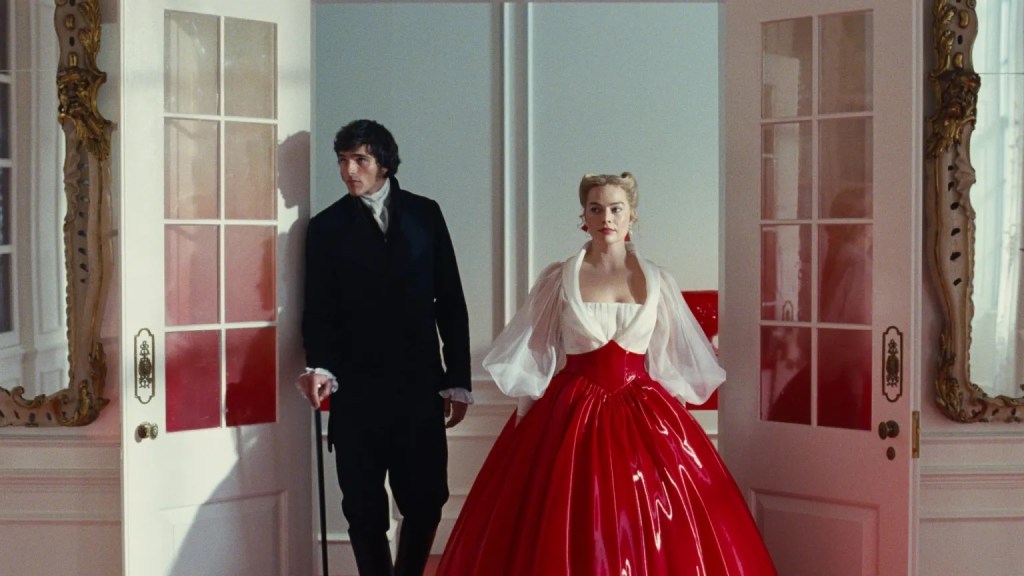
There’s nothing I love more than a bold swing, even when it doesn’t quite work out, and Fennell is certainly swinging for the fences here. There’s a reason the posters for her Wuthering Heights have quotation marks around the title. The basic marrow of the story is here, but so much is different. And when you’re adapting something so universally beloved like this, I think you have to really deliver something powerful and memorable if you’re going to do your own thing with it. And I’m not sure Emerald Fennell ever really does. Her adaptation is sold as this sexy, steamy meeting of classic literature and the tawdry romance novel. And while there’s plenty of steaminess to be found in Fennell’s film, there’s also no passion.
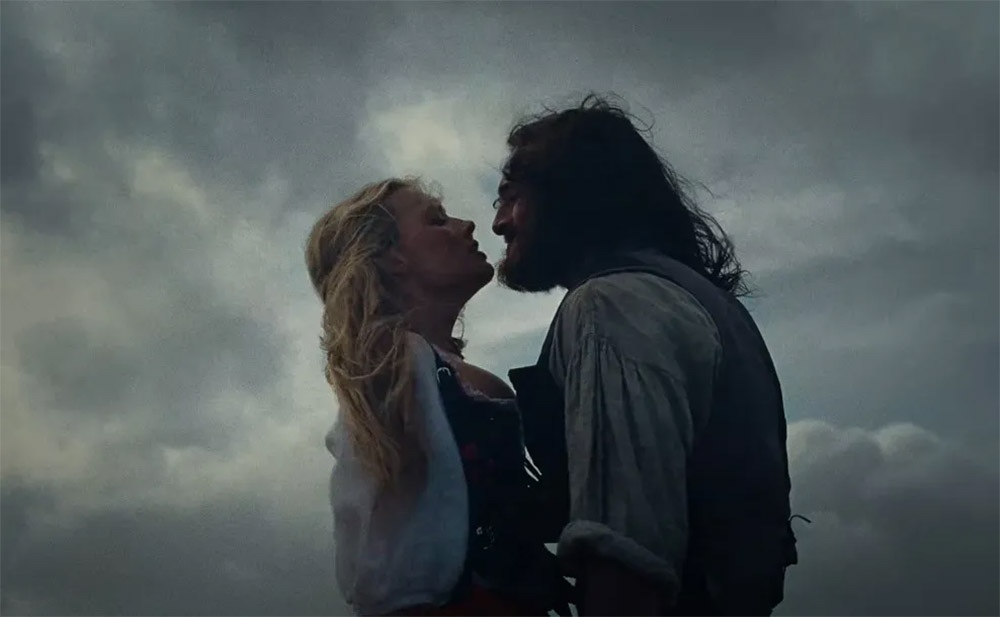
The casting of Margot Robbie and Jacob Elordi seems like a no brainer, on paper they should be an electric duo. It appears very unlikely to put two of the most gorgeous actors in Hollywood right now into a frame and they wouldn’t have chemistry, right? Well, sometimes if the chemistry isn’t there, it just isn’t there. And when your film lives or dies based on the impact of the chemistry, or lack thereof, of your two leads, everything else in the film suffers when that chemistry isn’t what it needs to be. And I found it rather difficult to get all wrapped up in their star-crossed romance.
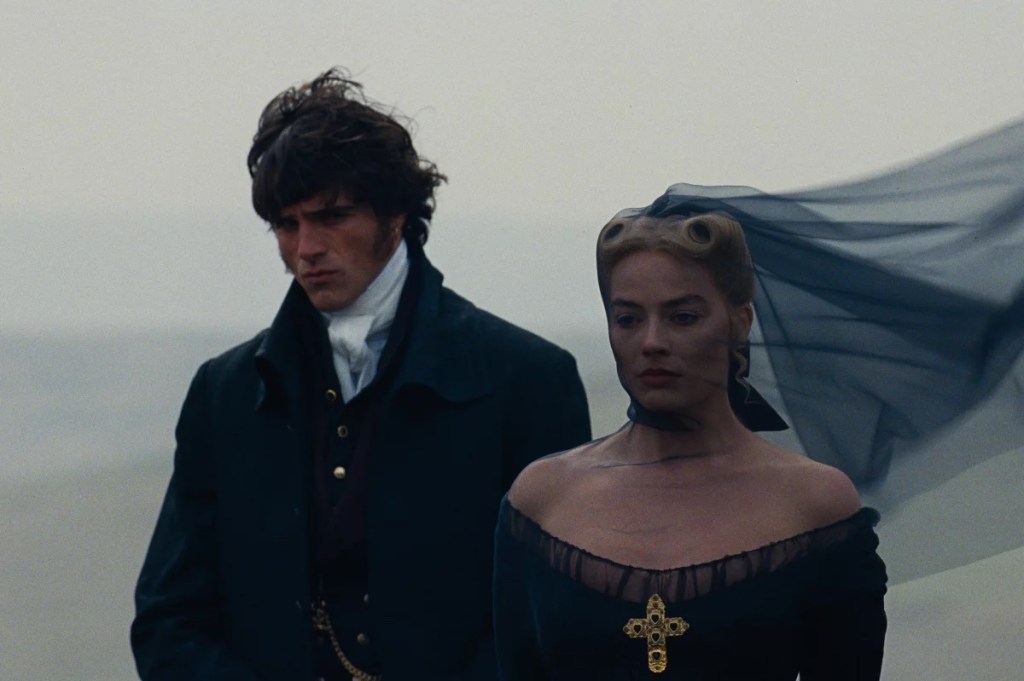
Individually, Robbie and Elordi can’t help but do good work. Robbie is selling the emotion and the longing, but she doesn’t make you feel it in your bones. Elordi nails the alluring, sensuous swagger of his Heathcliff, but he’s rarely giving the viewer a reason to fall in love with the character beyond just ‘he looks like Jacob Elordi.’ It also feels like the casting of Elordi in Fennell’s Saltburn was a much more effective use of what Elordi can do. Both actors seem to be on the same page about what they want this movie to be, and that’s important. Yet it also feels like neither actor is really bringing out the best in one another in the ways that can happen when your two stars really share a really powerful, palpable chemistry.
In our supporting cast, we have Hong Chau as Nelly, Cathy’s childhood friend, who is constantly looking for ways to ruin her life. And I kind of hated this character, which probably means Chau did her job effectively. And we have Shazad Latif as Edgar, the wealthy man who Cathy marries. He never gives you a reason to believe this character is meant to be more than the most basic kind of villain. Fennell has faced some controversy for casting Elordi in this role, due to his appearance not matching the ethnically ambiguous description of Heathcliff from the book. It feels like a very trying to have it both ways thing to cast Elordi as your lead, while also doing the Bridgerton colorblind casting thing in these other roles, and I don’t think it works. We also have Allison Oliver as Isabella, Edgar’s ward who keeps inserting herself into the drama. I also found Isabella supremely annoying, but that’s also probably the intent.
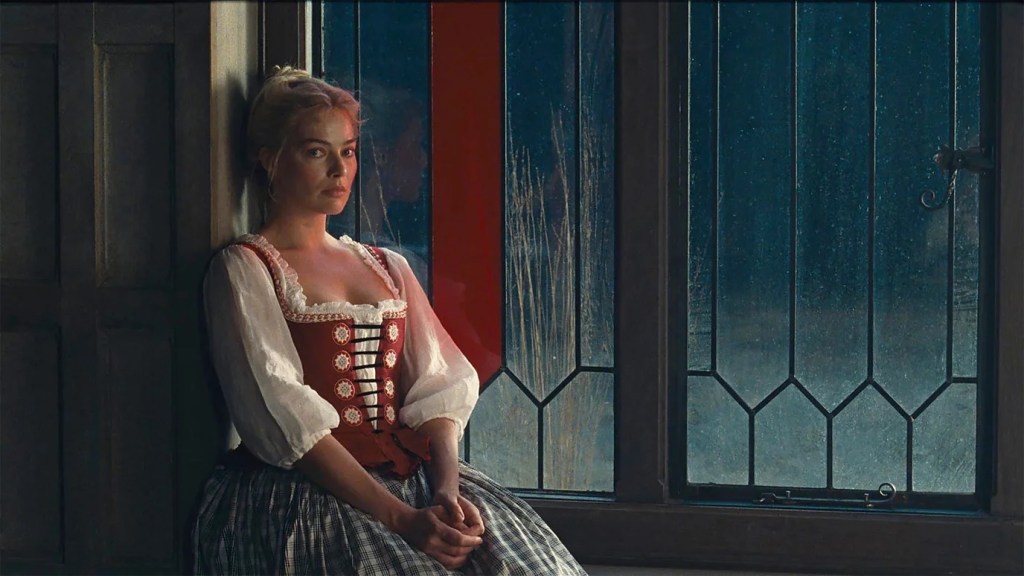
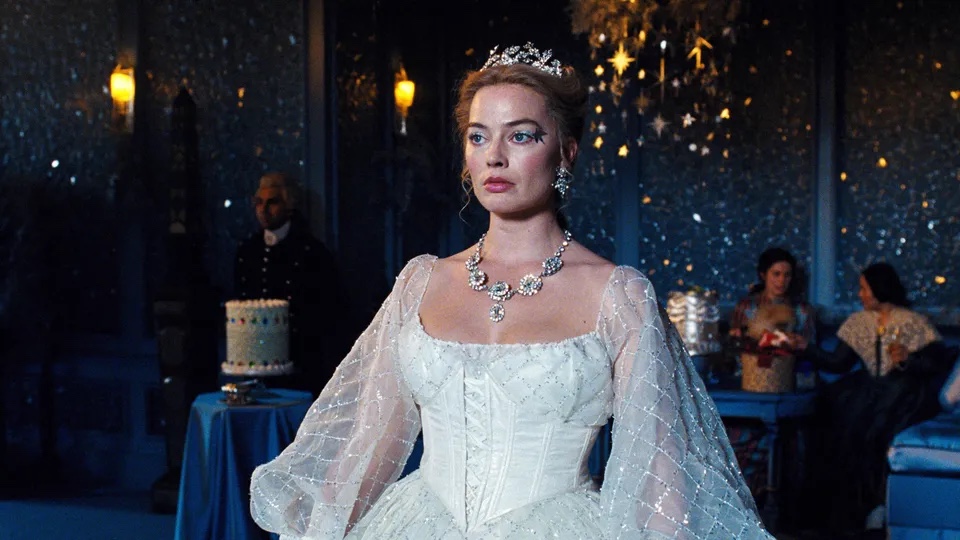
If there’s one thing Fennell’s Wuthering Heights undeniably gets right, it’s the style on display. The Oscar winning Linus Sandgren, who also shot Fennell’s Saltburn, is our cinematographer and the film is overstuffed with stunningly beautiful shots that are rapturously staged and thrillingly executed. The two time Oscar winning Jacqueline Durran is our costume designer, and everything Robbie gets to wear is absolutely stunning and increasingly more elaborate as the film goes on. She’s wearing many gorgeous gowns and oh my, the necklaces! Even if you walk away from the film with nothing else, it’s certainly worth seeing the film for the costumes.
Production designer Suzie Davies also makes thrilling use of these spaces, with many striking uses of color and blocking. The way she’s able to make Edgar’s house a place of immaculate wealth, but also a place you’d never want to live, is very powerful. We also don’t do as much as we could with the Charli xcx songs. I was hoping for something gleefully anachronistic in regard to the music, like what Sofia Coppola did in Marie Antoinette, and unfortunately we only get bits and pieces of that energy. Yet, I guess these songs liven up what could have been even more dull. The technical aspects here are so universally incredible, it’s unfortunate when the rest of the film never rises to their level.
I made a point to not reread Wuthering Heights, or to watch any prior adaptation of it in preparation for this film. Going in knowing that Emerald Fennell would use Emily Brontë’s novel as a jumping off point, and just do her own thing with it, I didn’t want to be constantly comparing it to anything while I was watching the film. I thought this would add an immersive quality to the viewing experience. And now I’m thinking maybe it would have been a better experience to have those other adaptations in the back of my mind to appreciate all that Fennell’s work was doing differently, even if what she’s doing differently isn’t really working.
But the biggest problem here is that Fennell’s Wuthering Heights is really quite boring. The choice to frame it as the steamy, tawdry romance novel-adjacent story with plenty of sex scenes really undercuts the tension of this story. It’s very possible to do a love story about yearning and longing, and also lean into spiciness and sex appeal (refer to my recent review of TV’s Heated Rivalry for more on this), but this film never successfully lives in both worlds. A large part of what makes a piece like Wuthering Heights work is the tension of what’s going to happen with these two characters. And unfortunately we never really feel that tension as we limp to the finish line.
So yes, unfortunately I didn’t find Emerald Fennell’s Wuthering Heights all that exciting or emotionally compelling. Since I never really got enveloped in this love story, I’m basically sitting there, looking at pretty sets and costumes, waiting for the story to reach its inevitable conclusion. And Fennell really wants you to feel something with this film. She clearly wants to send you out of the theater in tears, and I was never, not even once, moved. I’m hoping fans of this property will find more to love than I did, but as a big fan of the films Emerald Fennell has previously given us, I was really expecting a lot more with this. Robbie and Elordi are doing the best they can with what’s in front of them, and despite everything working in the film’s favor, it still never truly resonates emotionally.
 Salt Lake Film Review