
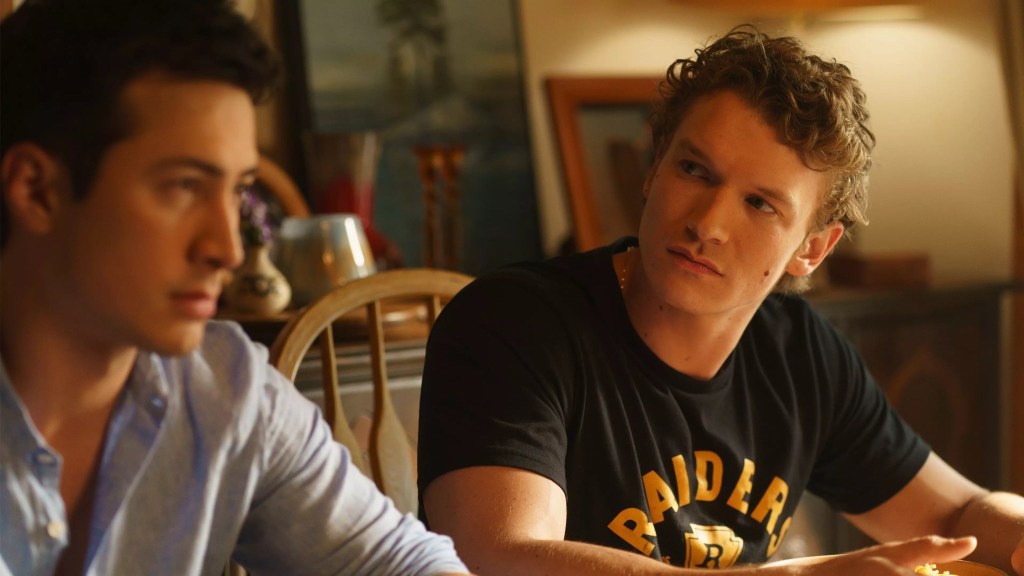
Author Rachel Reid is known for the Game Changers series, a very popular collection of six books that I hadn’t really heard of, but probably wouldn’t have taken seriously if I had. And oh, what a mistake that would be. This series is often described as ‘smutty romance’, and no hate, it’s just never been my kind of thing. I was looking forward to Jacob Tierney’s television adaptation of Heated Rivalry after seeing a trailer for it a few months back, but it seemed unlikely I’d be able to. An in house production from the Canadian streaming service Crave, which mainly acquires shows from international streaming services that do not exist in Canada, the show had no plans for US distribution until about a week before the first episode would air. HBO Max snatched it up for American distribution at the last minute and it has since become a pop culture phenomenon no one could ever have imagined. It’s probably because this show is the kind of quietly revolutionary (I’m sorry) game changer that quickly became the best thing I saw on TV, in all of 2025.
A quick note about spoilers – the first season of Heated Rivalry wrapped the day after Christmas. As I write this, it’s the first week of January, and I still haven’t been able to shake this show from my mind, so I had to write about it. And in the event you haven’t seen this series yet, I’m going to be careful about spoilers. There are certain aspects of the show that I can’t avoid talking about if I really want to get to the bottom of what makes this show so special. So, if you’re sensitive about spoilers, maybe come back to this later. But who am I kidding? You’ve probably already watched and rewatched the entire series already, just like I have.
Shane Hollander (Hudson Williams) is a brilliant, talented, and somewhat antisocial Canadian-Japanese hockey player who, in the summer preceding his rookie season, runs into the charming and mysterious Russian hockey player Ilya Rozanov (Connor Storrie). A spark quickly ignites between the two and they find themselves entangled in a passionate, forbidden affair. They have lots of sneaky, steamy fun until their emotions begin to sneak up on them and complicate what was supposed to be simple.
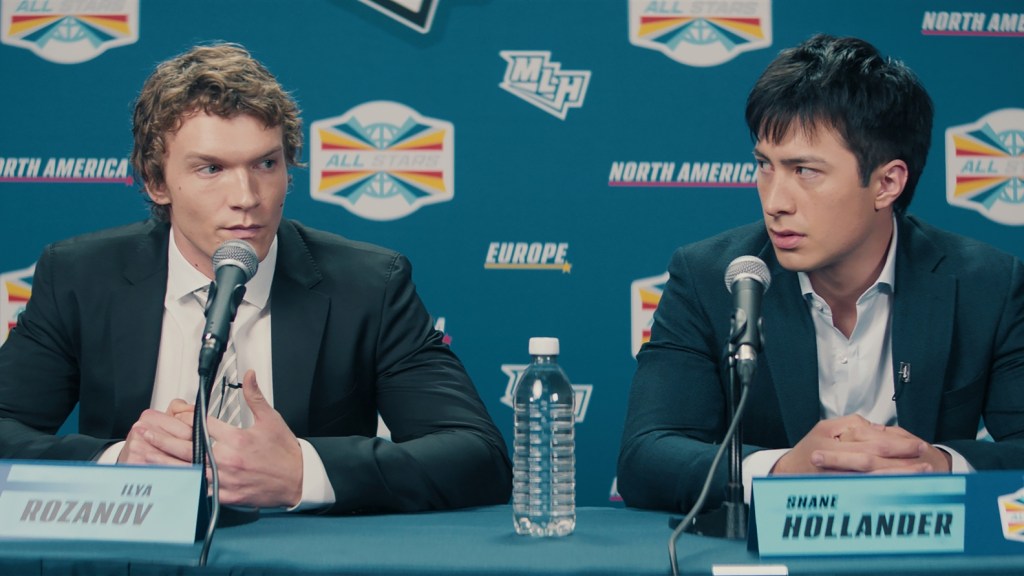
In my attempt to figure out just what it is that makes Heated Rivalry so special, I had to get the Rachel Reid books. And unfortunately I started Heated Rivalry, the novel, not knowing that it was the second book in her series. After finishing Rivalry, I’ve been reading the rest of them in order, but I think the central reason this series works so well is entirely evident in the books. When you press play on the first episode, you’re expecting a sexy, steamy, guilty pleasure-type confection. And for the first few episodes, it delivers on that promise with some scenes that, frankly, I was surprised to see on television. But then once you get into the latter half of this six-episode season, the emotion in this story and the depth in these characters becomes the driving force. In the show, it comes a bit earlier than the book, with a gut punch of a scene at the end of the second episode that changes the dynamic and the trajectory of these characters entirely.
But I’m getting ahead of myself. The main reason Heated Rivalry hits so hard is because the audience is witnessing nothing short of the birth of two generational, monumental talents. The performances by relative newcomers Hudson Williams and Connor Storrie, individually, couldn’t be better. They clearly know these characters so well and want to take care of them and portray them in the right way, and their chemistry and the way they play off each other turns these performances into something incredibly rare.
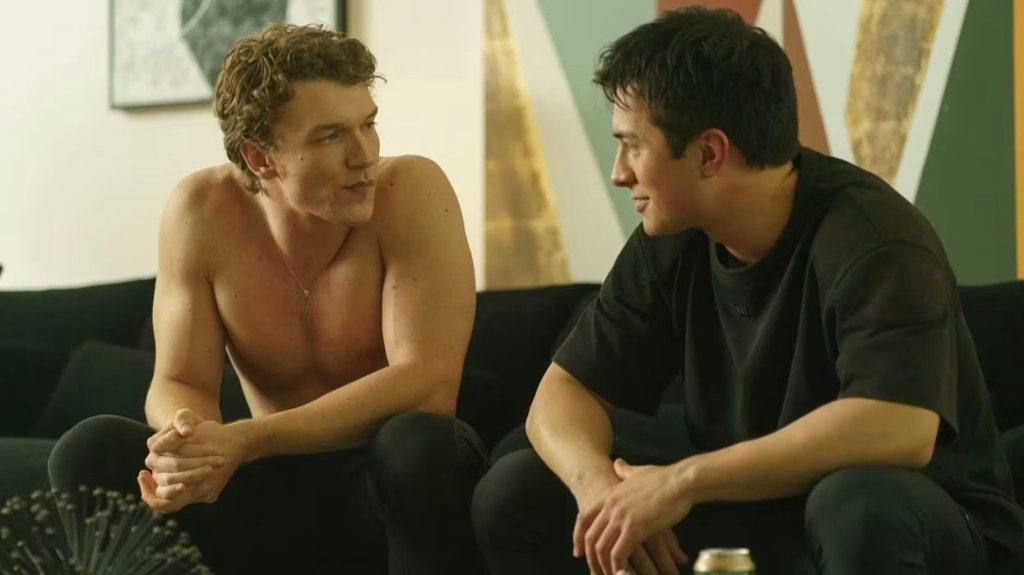
These are two actors who are constantly challenging each other and bringing out the best in each other, and it seems impossible to imagine any other two actors better suited to these roles. Since watching the series, I’ve gone on a YouTube deep dive of interviews with the Storrie and Williams, and they have the most palpably infectious and playful chemistry, and it’s clear these are two people who genuinely love each other, and probably became lifelong friends as a result of this series. I keep wanting to learn more about them, and this exhaustive deep dive has somehow only enhanced my admiration for these two actors. These are star-making performances and I will watch anything either of them does moving forward.
I had only seen Connor Storrie previously in the critically maligned Joker sequel, where he played a small but crucial role in the film’s final moments. I didn’t realize that until after I’d seen the two-episode Rivalry premiere, however. First of all, he’s doing a perfect Russian accent, and speaking the language flawlessly, despite having been born and raised in Texas, and allegedly having only three weeks to learn to speak Russian. He has a Russian language monologue in the fifth episode which is undeniably one of the series’ most gut-wrenchingly emotional highlights. But as technically proficient as Storrie’s performance may be, it’s the way Ilya evolves emotionally over the course of the series that most powerfully stands out. How the armor of that bravado and that swagger with which Ilya carries himself proves to only be a defense mechanism to guard what’s really going on with him. There’s deep shame and deep insecurity within the walls Ilya hides behind, that only starts to come down once his relationship with Shane evolves. And Storrie’s attention to character detail is amusing and creative, yet deeply perceptive and powerful. He’s got that thing the camera likes, that thing where you just can’t take your eyes off him, but then again, so does Hudson Williams.
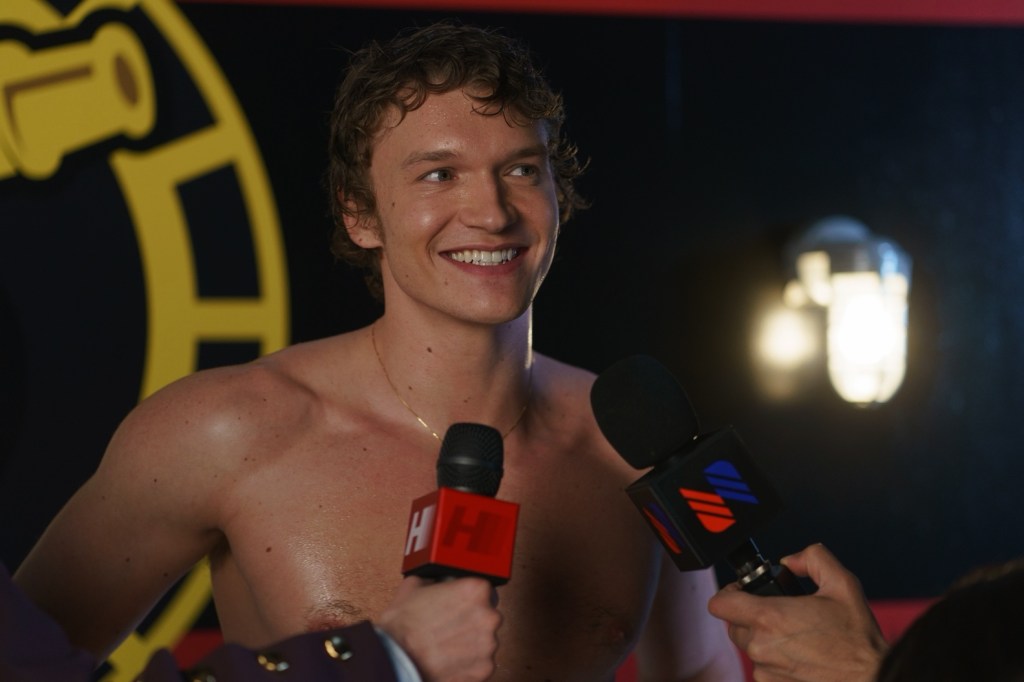
I hadn’t seen Hudson Williams in anything previously, and this is a hell of a first impression. Shane is more or less meant to be the audience’s conduit into the ultra-competitive world of professional hockey, and it’s clear from the very beginning Shane is maybe not processing all of this as well as he could be. When we first meet Shane, he introduces himself to Ilya, who initially playfully rebuffs him. It only takes a few more interactions between the two before it becomes clear how much all of this is going to mean to Shane. Again, trying not to spoil anything, but there’s a scene at the top of episode 5 involving Shane and the character Rose (more on Rose in a bit) at a restaurant, where the detail in Williams’ performance absolutely devastated me. How you can see every possible emotion flashing across his face – fear, panic, shame, regret, then ultimately pure joy once he realizes he’s not in danger. There are a million moments over the course of these six episodes where Williams broke my heart, and I can’t wait for him to do it again next season.
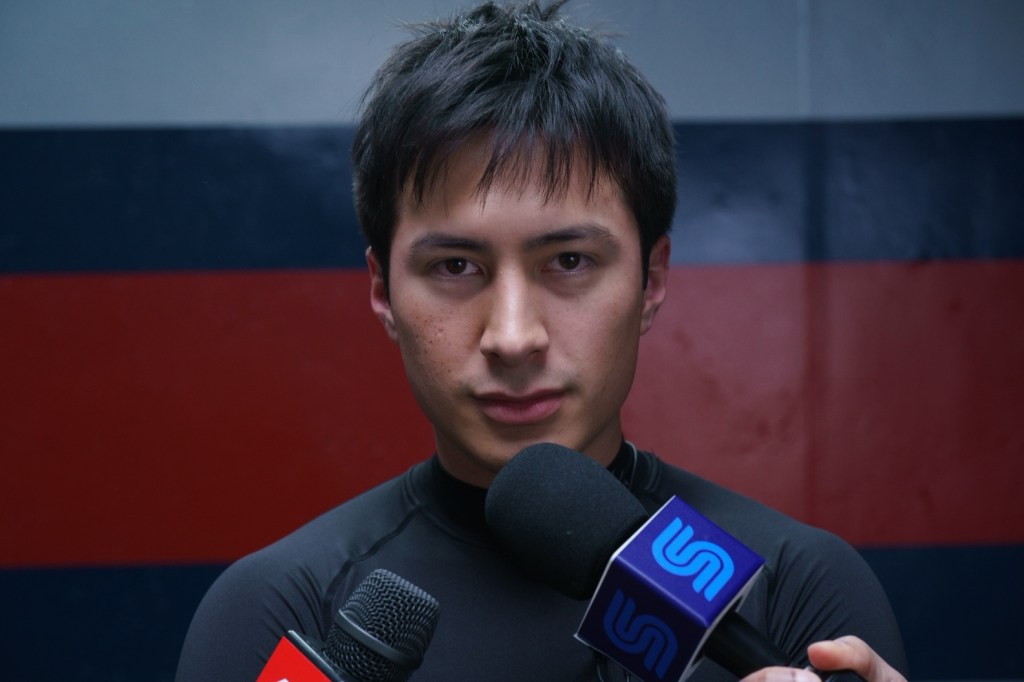
The series is primarily a two-hander, but there are a few supporting players I must point out. Rivalry’s third episode follows the relationship between New York hockey player Scott Hunter (François Arnaud) and Kip (Robbie G.K.), who meet-cute at the smoothie bar where Kip works. I was unaware at the time, but Scott and Kip’s romance is the subject of Game Changer, Reid’s first book in this series, and this third episode must essentially condense the guts of this 300-plus page book into an hour of television, as Scott and Kip will eventually become crucial to the overall narrative. Picking up after Rivalry’s explosive two-episode opener with a bottle episode, where our two leads are barely seen for the entire hour, seems like an incredibly bold and risky move. And ultimately this episode became a fan favorite, and that wouldn’t have happened if it weren’t for the emotionally striking work from Arnaud and G.K.

The supporting cast also features Ksenia Daniela Kharlamova as Svetlana, Ilya’s friend and occasional lover. She also has a moment near the end of the fifth episode that totally blew me away, but a rewatch emphasizes how much was going on with her from the beginning. Sophie Nélisse appears as Rose, a famous actress with whom Shane attempts a socially acceptable relationship. And when we meet Rose, it seems like she’s just here to get in the way, but in the aforementioned moment in episode 5 (it seems like EVERYTHING happens in episode 5), Nélisse has a stunner of a moment, which sure, is a result of good writing, but the way she plays it could have been all wrong in a number of ways, and she plays it flawlessly. Christina Chang and Dylan Walsh play Shane’s parents, who don’t seem like much in the beginning, but that’s just another instance of this show playing me for a fool.
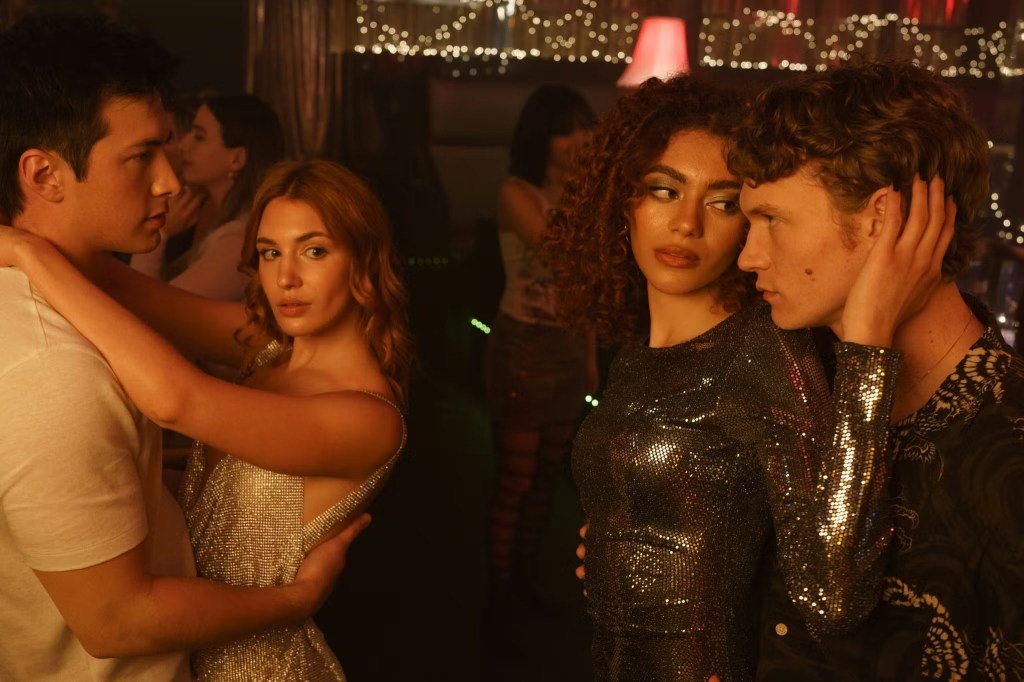
The technical aspects here are also top notch. Cinematographer Jackson Parell has many moments that stuck out to me over the course of this season, but two in particular come to mind. At the end of the fourth episode, there’s a sequence where Shane and Ilya are desperately trying to live separate lives apart from each other, yet run into each other at the same nightclub. The way this scene is shot paired with the choice of music, makes this an unforgettable moment. The second standout moment opens the season finale with a three-plus-minute long take, where so much has to be communicated to the viewer, and the planning and choreography involved in framing this in one shot, is something I find very impressive.
The editing in this series must also be acknowledged. Arthur Tarnowski and Véronique Barbe are our editors, and the first few episodes are constructed with a kind of ultra quick, manic energy, like you’re watching a sports highlight show (I think it’s called SportsCenter?). And when the story slows down in the second half of the series and lets you spend more time discovering who these characters really are, the show becomes even better. There’s one specific editing choice in the opening montage of episode 4 that totally floored me. You’ll know it when you see it. Production designer Aidan Leroux gives depth and texture to this world, with lots of glass and sharp edges in the apartments and houses, and choices that tell you so much about the characters you’re following. And if you’re anything like me, you just want to live forever in these locations. And music supervisor Scotty Taylor is responsible for some of the most instantly iconic needle drops I’ve seen in ages.
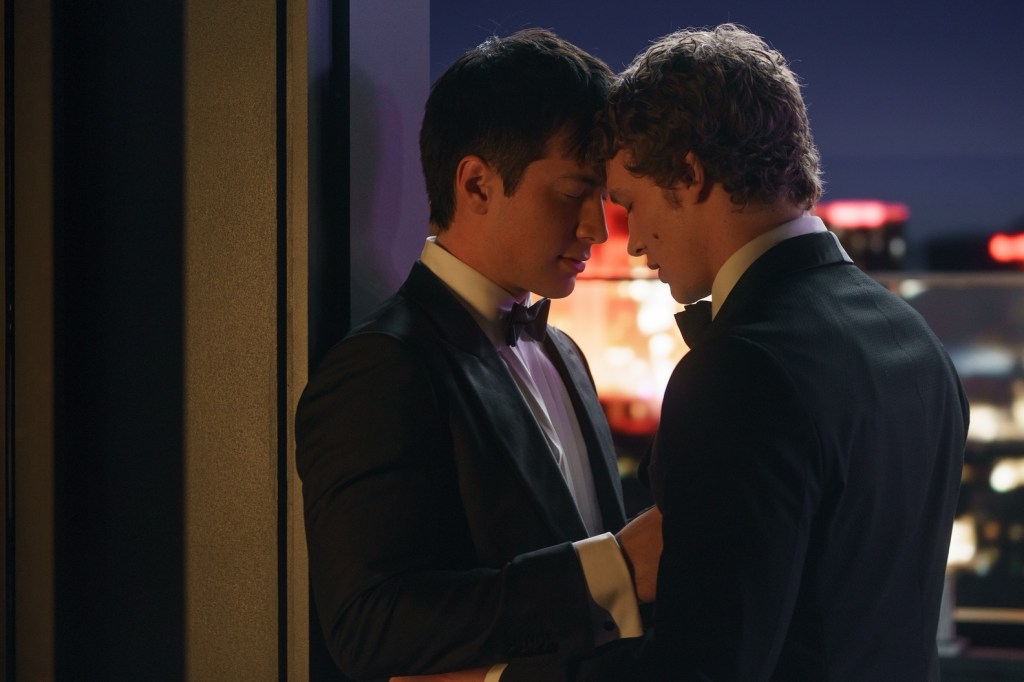
I’ve heard people suggest the reason Heated Rivalry, the series is so good has little to do with Heated Rivalry, the book, and I have to dispute that. Jacob Tierney, who also created the Canadian megahit Letterkenny and its spinoff Shoresy, was absolutely the correct person to adapt this series, however none of this would work if the bones of a great story weren’t in the source material. I think this collaboration between author and adapter is probably one of the best I’ve witnessed in my lifetime. Tierney is expanding upon Reid’s work but never undermining it. The show smartly lures the viewer in with the swoony, sweaty, smutty sequences the advertising promises, but when you get to that aforementioned end-of-episode 2 gut punch, the stakes change entirely. I quickly become very invested in Shane and Ilya’s journey and needed to learn more about them and the overall world in which they exist. None of that would be possible without the steady foundation of Reid’s novels.
Also, a quick word about the mature content in this series. I’ve heard people say, ‘well, isn’t that basically porn?’ when I mention how great this show is. If it isn’t clear by now, I feel like this is an entirely reductive, crude and simply inaccurate way to quantify this series. But also – I forget what critic originally made this point, but it’s an observation that has stuck in my mind for years – the sex scene can serve the same purpose as a production number in a musical. In a few minutes of screen time, it can tell you so much about what the characters want, their insecurities, traumas, and desires, what makes them most happy and what they need to achieve that happiness. It also (and this is especially true in Heated Rivalry) can communicate how characters feel about each other and how that can evolve and shift over time. For instance, Shane and Ilya refer to each other by their last names for roughly the first half of the season, but during a sex scene later on, they call each other Shane and Ilya for the first time, and the importance of this moment and what that means moving forward, couldn’t possibly be lost on any viewer.

Also, film and television have become afraid of not only the sex scene, but the romance genre entirely in recent years. There are barely any romantic comedies that go to movie theaters anymore, and there’s a big central reason why. Over the course of the last decade or so, audiences have become allergic to sentimentality and earnestness. Everything has this winking self awareness and irony to it, and the piece of media feels like it constantly needs to prove that it’s smarter than the viewer. As a result, audiences have become desensitized, cynical and unfamiliar with what stories like this can do when done especially well. Perhaps that’s why Heated Rivalry has become the breakout pop culture phenomenon it has.
So, overall, I found it very easy to get enveloped in the world of Heated Rivalry. As a love story, it’s approached with the kind of heart-on-its-sleeve earnestness that is almost never done this well, but as a piece of queer representation, it’s quietly revolutionary, and is changing the perception of what this kind of story should look like. The popularity of this series could also legitimately change things in the ultra homophobic world of professional hockey. Also, queer stories are so often focused on trauma, death or heartbreak, and it’s so satisfying to see a story in which our protagonists literally get to drive off into the sunset. And in a time where the very existence of queer people is constantly being threatened, the joy and wish fulfillment that permeates throughout this series could not feel more cathartic.
Heated Rivalry is so much more than it initially seems. At the outset, it seems like this is mostly due to the instantly iconic performances from Connor Storrie and Hudson Williams, but it’s really because every single person involved with the creation of this series knew how to tell this story in the ways that mattered. And good thing I have four and a half more books in this series – plus a new one allegedly arriving in September – to enjoy in the interim between now and the show’s second season. Because now that I’m in this world, I never want to leave, and it’s going to be a long wait until season two.
 Salt Lake Film Review