

I’m predisposed to enjoy an Edgar Wright movie, even when they’re medium to not great. For instance, I’m one of about 10 people who loved his 2021 film Last Night in Soho. It’s my (unpopular) opinion that Wright is particularly adept at subverting genre and juggling tones. This is especially evident in films like Scott Pilgrim vs. the World and Baby Driver. I’d been looking forward to his newest, a remake of the 1987 Arnold Schwarzenegger film The Running Man, itself an adaptation of the 1982 Stephen King novel. I hadn’t read the novel or seen the original film, so I’m coming into this story cold, and that might account for why I was so impressed here. Edgar Wright is finding fascinating ways of making this 40-something year old narrative feel like something that exists right in this very moment.
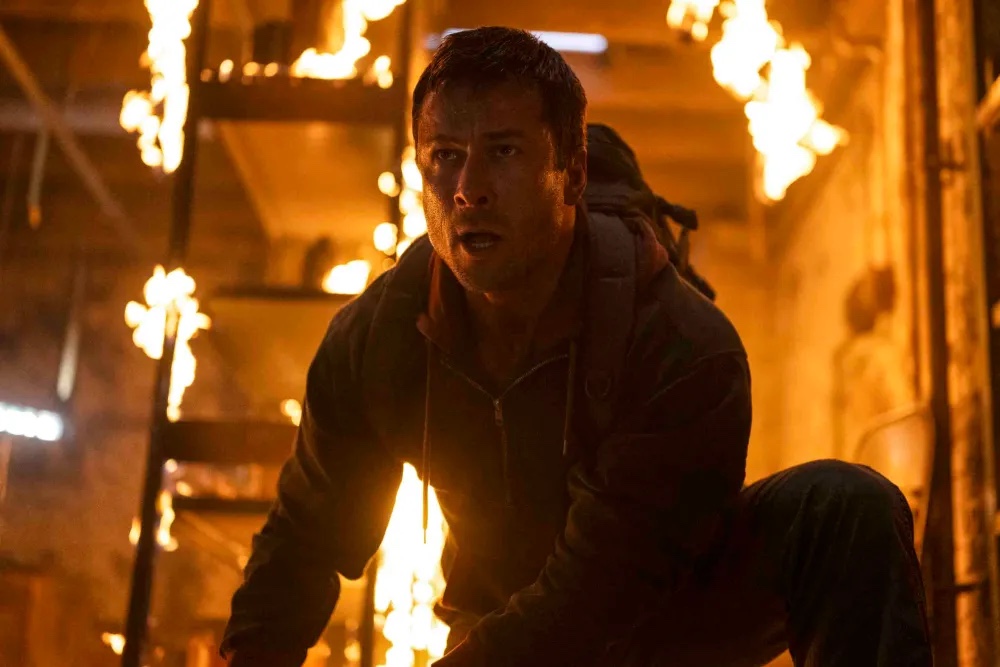
In a dystopian landscape that feels like it could be a very near future, Ben Richards (Glen Powell) is trying to find a way to afford his ailing daughter’s medication. He’s manipulated into signing up for The Running Man, a popular television competition series where three people are hunted by professional assassins for 30 days, and the name of the game is to simply stay alive. The show’s producer Dan Killian (Josh Brolin) tells him if he’s able to, he will win a billion dollars and will be able to get his family out of the working class slums for good. While Ben fights to stay alive, he unwittingly becomes the season’s underdog fan favorite, threatening to topple the system built around this show.

The Running Man runs 133 minutes, which is way too long for this kind of movie. At the outset, you’d expect a movie like this to be 105 minutes, tops. And yet I remembered as I was watching the film, Edgar Wright continually shows a strong understanding and control of tone and pacing. And despite the bloated runtime, The Running Man is a breathless, hilarious and thought-provoking thrill ride that upended my expectations the entire way through. It feels like a cautionary tale in similar ways to The Long Walk, another Stephen King adaptation from earlier this year. But unlike that film, I didn’t leave The Running Man feeling horribly depressed and like there was no hope for anybody. The implications of this story are urgent and horrifying, but Wright manages to find ways to make all of it feel like a popcorn movie. Audiences will be along for this crazy ride, but might drive home considering all the haunting and unexpected ways this story connects to life in the year 2025.
This couldn’t be a better showcase for everything star Glen Powell does so well. He’s a leading man action hero type who clearly wants to be a character actor who does more challenging work. And this character lets him play with different personas and accents, but it’s playing to all of his strengths in effective ways. He’s a likable and incredibly charismatic anchor for this story that keeps spiraling wildly out of control, and he somehow finds ways to make all of this work on a human level. I’m not sure how much range Powell has as an actor, I’m hoping he continues to impress me moving forward, and judging by this, I think he will. But even if Powell stays in his lane and continues to do what he does this well, I think he’ll have a lot to offer viewers for years to come.

We have some fun supporting performances here, but the story is structured in kind of an episodic way where Ben goes from one place to another while he’s in hiding, looking for help from various figures from his past. And regrettably, no one is in the movie very long. Colman Domingo is having a ball as the show’s charismatic and very over the top host. Michael Cera pops up in a strange kind of role for him, and he’s having a great time too. Josh Brolin is also chewing scenery big time as our smarmy, charismatic villain. CODA’s Emilia Jones pops up as a young woman who Ben holds hostage. Lee Pace has a brief appearance near the end of the film in a role I don’t want to spoil. And early on, we have William H. Macy in a few scenes as a man who helps Ben when he’s on the run. And Katy O’Brian shows up as one of Ben’s fellow Running Man contestants and Sinners’ Jayme Lawson plays Ben’s overworked wife. Unfortunately, almost everyone in this supporting cast is underutilized and has very little to do.
Wright’s filmmaking style here is flashy and frenetic, and a big reason this works so well is the editing. Paul Machliss is our credited editor here, and he’s worked with Wright since Scott Pilgrim. It’s easy to see why the two keep working together, Wright’s filmmaking style amplifies the quality of Machliss’ editing. I’ve kind of said this already, but I’ll hit this point again – The Running Man clocks in at over well two hours and it does not at all feel that long. The contribution of the editor to that success cannot go understated. Chung Chung-hoon, who previously worked with Wright on Last Night in Soho, is our cinematographer here. The camerawork is striking but has that flashy, might-as-well-be-a-music-video thing that will either be a bug or a feature depending on the viewer. Production designer Marcus Rowland returns as well, having worked with Wright since Shaun of the Dead. The construction of this world is deeply vivid and bleak. It’s a smart move to not make any of this feel too futuristic, because it feels like none of this is that far off, and that should terrify the viewer.
The Running Man might pale in comparison to some of Edgar Wright’s earlier films, but given my subdued expectations, I left sufficiently entertained, maybe even enthusiastically so. The film zips by at a good clip and connects this undetermined point in the future to present day in some compelling ways. The social commentary is strong, but never beats you over the head with its message. Ultimately this is a very fun action movie that has something to say about the world around it, which is more than I can say for a lot of studio tentpole blockbusters lately. And also, there’s Glen Powell doing more of that megawatt movie star thing audiences have come to expect from him, and that’s the central reason to see The Running Man.
 Salt Lake Film Review