

It’s always an event when Richard Linklater has a new film coming out, and this year we have two. The first is Blue Moon, which premiered back in February at the Berlin International Film Festival. Described as a biopic of Lorenz Hart with an Oscar-caliber performance from Ethan Hawke, the film was on my radar, but wasn’t something I was super excited about. It became clear to me early on that Blue Moon was aggressively my kind of movie, and that I would have a good time with it. However, I couldn’t have expected the emotional roller coaster the film ultimately put me through.
It’s opening night of Oklahoma! on Broadway in March 1943. Lorenz Hart (Ethan Hawke) has walked out early, embittered by the success of his former songwriting partner Richard Rodgers (Andrew Scott), who has recently teamed up with Oscar Hammerstein II. A recovering alcoholic, Hart retreats to Sardi’s, where the after party will soon take place. He talks to bartender Eddie (Bobby Cannavale), who he keeps telling not to serve him any alcohol. Over the course of this evening, personal and professional relationships and old resentments begin to unravel.

This kind of dialogue-heavy, single-setting, could-easily-be-a-stage-production kind of movie has always been my kind of thing, so I was predisposed to buy what Blue Moon was selling. However, none of this would work without Robert Kaplow’s script and Hawke’s performance. The fizzy, effervescent tone we start with is so inviting and enjoyable, so much so that it kind of shocked me when this movie ended up breaking my heart. There’s a lot of comedy off the top, but you can see what’s really going on with this character and the implications of that which evolve over the course of this story. Focusing on a figure like Lorenz Hart, who I admittedly did not know much about, the film depicts a pivotal sliver of his life, a night where everything he’s experienced for years comes to a head, and this is a truly intelligent storytelling decision.
I’m not sure if this is career-best work from Ethan Hawke, but it’s easily the best work he’s done in years. Hawke seems to click with Linklater’s sensibilities and that has been evident since Before Sunrise. This is the most expressive, the most lively and the most colorful performance Hawke has delivered in years, and as a viewer I was hanging on his every word. That’s a high compliment considering this dialogue-heavy script. He puts the viewer through a wide range of emotions, and even though he’s playing a historical figure on paper, he feels like a human being and there’s a lot of recognizable human emotion and a lot that’s relatable in this work. Ethan Hawke has never been the kind of actor who I follow from project to project, but occasionally when he’s in a role like this, there’s no one who could have done better.
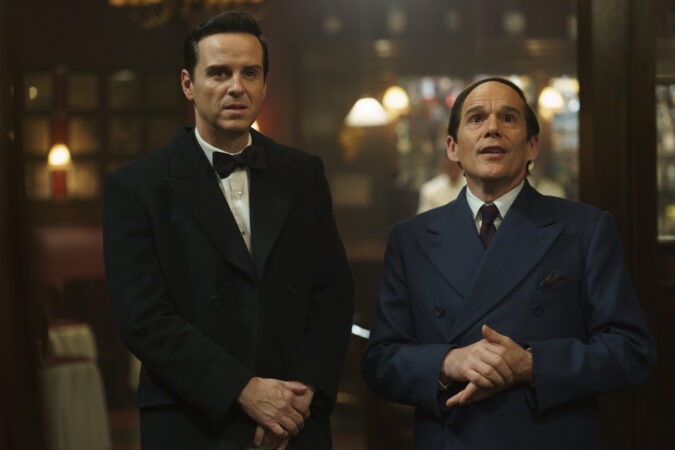
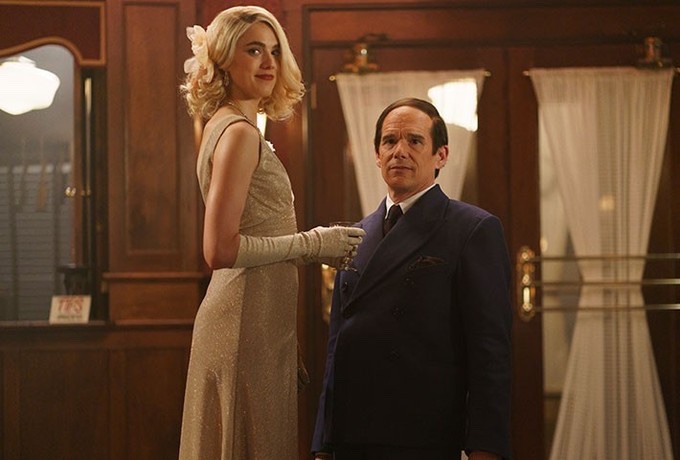
Every other performance here is more or less an extension of what our lead character is going through, but because the central character is so compelling, this is hardly a problem. Margaret Qualley just has that thing about her where it feels like she could have been existed in 1940s movies. She’s got that specific kind of voice and a set of mannerisms that harken back to Hollywood’s golden age, and she’s a pleasure to watch here. This is also the best we’ve seen from Bobby Cannavale in awhile. His bartender is sympathetic to Hart’s issues, and conflicted about continuing to serve him drinks, as it appears alcoholism is a big part of his overall problem. It was also interesting to see Andrew Scott in an entirely different kind of role. The character of Richard Rodgers is hardly a villain, but Rodgers and Hart have drifted so far from each other, and there’s a lot of recognizable humanity in the way that’s depicted as well.
Richard Linklater is a filmmaker I always enjoy, but he also knows when to get out of the way and let his actors and his scripts take the spotlight. And that’s exactly what we have here. The filmmaking isn’t showy. Almost the entire film is set in this one location and I mean it as a compliment when I say this feels stagy. And it makes a lot of the choices I like in the biopic. When a biopic has a confined setting like this, and only depicts an important moment in is subject’s life, it can tell you so much about the central figure and it can make you want to learn more about them. And I certainly did some Googling about the life of Lorenz Hart when I got home from this film, so I’d say in that respect, it was effective.
If you prefer a biopic that walks you through the subject’s entire life and tells you how to feel about everything, Blue Moon may not be for you. But if you’re drawn to the kind of story that tells you a confined, yet compelling story, and especially if you like the kind of films that could easily belong on the stage, I think you’ll find a lot to enjoy here. It’s the kind of film where every aspect – the writing, the performances, the humor and the heartbreak – fired on all cylinders for me from beginning to end. This was very much my kind of thing from the moment the lights went down. I laughed through the majority, and then I was taken by surprise emotionally in endless ways.
 Salt Lake Film Review