
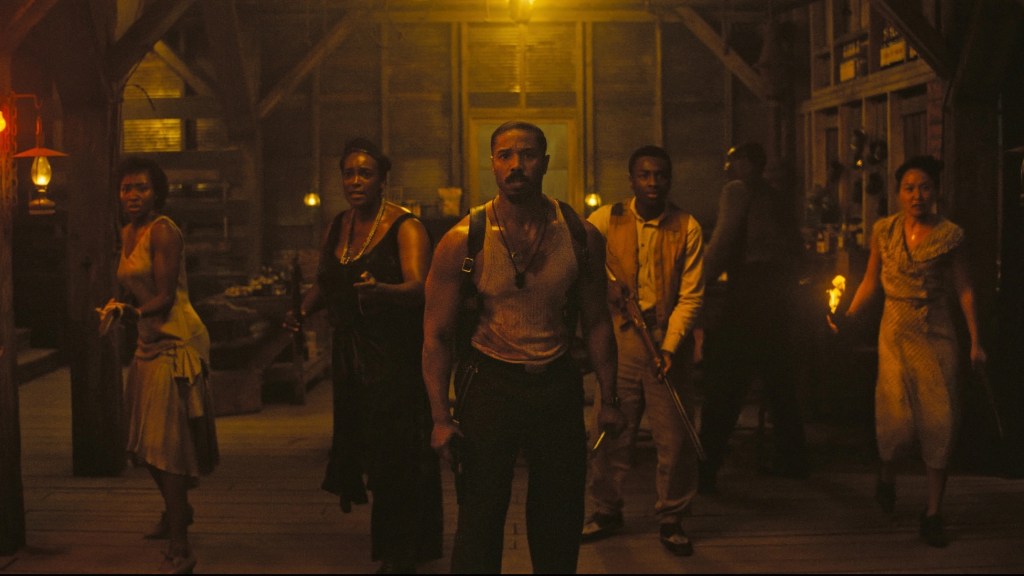
Writer/director Ryan Coogler has had one of the most exciting cinematic trajectories of any recent filmmaker I can think of. From his breakout indie hit Fruitvale Station, he went onto big-budget franchise fare with the Creed and Black Panther films, which managed to take the promises made in his earlier work and transfer them to the kind of cinematic canvas where he had the budget to do basically whatever he wanted to do. And a new Ryan Coogler movie is always cause for celebration, I think he’s one of our strongest working filmmakers today. But however great his previous films may be, his new film Sinners takes everything to another level entirely.
Open on 1932 Jim Crow-era Mississippi. Identical twin brothers Elijah (nicknamed Smoke) and Elias (nicknamed Stack) (both played by Michael B. Jordan) arrive after having spent years in Chicago, hoping to open a blues club, or ‘juke joint’, as it was called then. They encounter many people from their past, including cousin and guitar player Sammie (newcomer Miles Caton), piano player Delta Slim (Delroy Lindo), singer Pearline (Jayme Lawson) and caterer and Smoke’s estranged wife Annie (Wunmi Mosaku). On opening night, a joyful crowd shows up and a good time is had by all, until an evil they never could have expected knocks on the door.
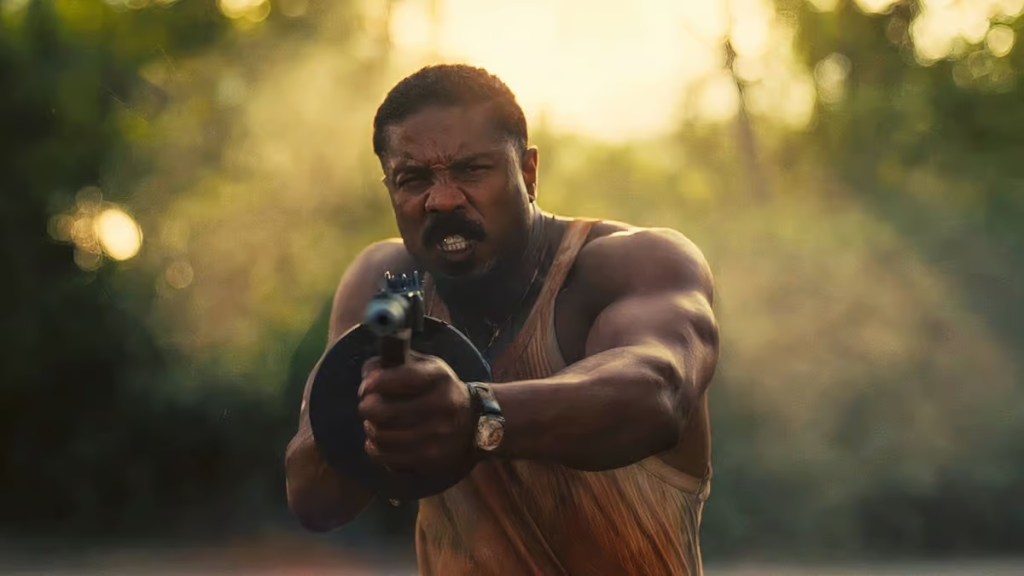
In a cinematic age where audiences are starved for original, thought-provoking ideas and non-sequel, non-IP offerings at the cinema, Sinners explodes off the screen and feels like an answer to viewers’ prayers. It’s taking inspiration from a number of different films, for sure, but leaves you shaken to your core, feeling like you’ve witnessed something you’ve never quite seen before, and if you love movies like I do, this should be tremendously exciting. I hesitate to make such a grand declaration after seeing the film one (1) time, but Sinners might not only be Ryan Coogler’s true masterpiece, but also one of this decade’s most essential films.
Michael B. Jordan has that kind of swaggering, dazzling movie-star charisma and he’s proven it time and time again, but Coogler’s decision to have him play dual roles here gives Jordan a challenge he’s never tackled before, and he’s incredible. The way he’s able to make it absolutely clear to the viewer which version of this character they’re watching and give both of these people personalities distinct from each other is pretty fantastic.
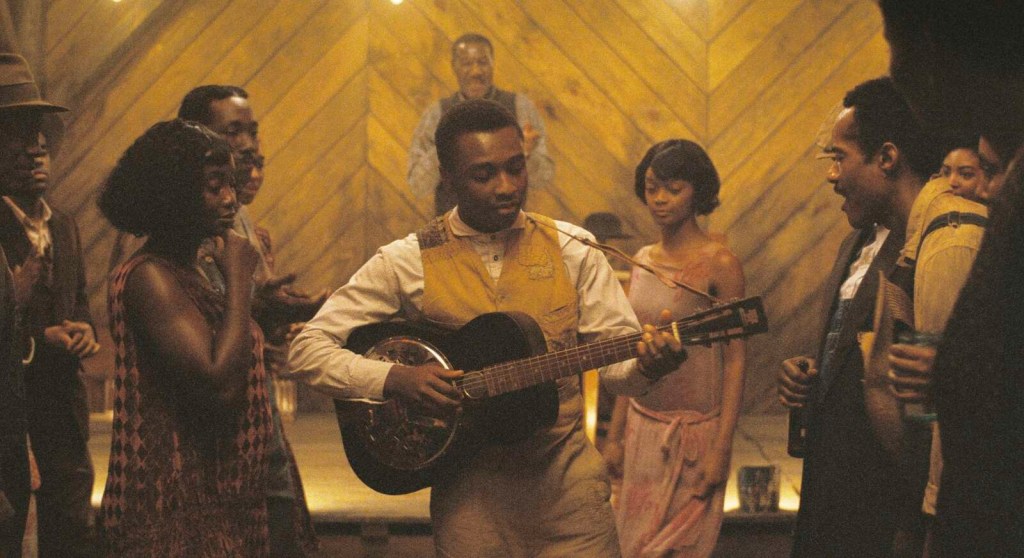
Everyone in this cast is a standout, and everybody gets a variety of standout moments, but in an effort to keep this as concise as possible (I could gush about this cast all day), I’ll focus on a few. Wunmi Mosaku is great in everything, and has proven that over and over, but the way she’s able to take this minor character and give her the feeling of a complete backstory and life before this film, is kind of incredible. This is also the debut film performance from Miles Caton, who has to do a lot here. He’s an incredible musician (more on this film’s use of music later), but he kind of has to serve as the audience conduit into this world, and there’s a lot of vulnerability and emotional complexity to what he’s giving you here.
Hailee Steinfeld also appears as Mary, an ex-flame of Stack’s, who has always felt alienated in this community, as a white-passing mixed race woman. There could be a lot less here than there is, and it’s all because of the work Steinfeld is doing. Jack O’Connell leads the group of the evil vampires that terrorize the juke joint, and there’s a lot of interesting subtext with his character as well, as the Irish were persecuted in ways not dissimilar to the African-American community in Jim Crow era south, and O’Connell is mainly playing a villain here, but the approach this film is taking of observing different kinds of American prejudice in this time period, gives the film’s point of view a lot of compelling texture.

As per usual with any Ryan Coogler film, the tech aspects are top notch here. In fact, I think he’s probably our best example of this era of Hollywood’s trend of let’s-give-a-bunch-of-money-to-an-acclaimed-indie-filmmaker-to-make-a-blockbuster-and-see-what-happens being a good idea. Ludwig Göransson returns to do the score, and it’s terrific. Autumn Durald Arkapaw shot this using the ultra-wide Panavision 70mm cameras, using the now extremely rare 2:76:1 aspect ratio that was commonplace in old Hollywood epics, but nowadays has largely been replaced by the 2:39:1 aspect ratio. I hear Coogler shot several sequences using IMAX cameras, and I was unable to make it to an IMAX screening for my first viewing, but I imagine this is the optimal way to see this movie. I’ll get to it, because I fully intend to be seeing this one again in theaters.
I also need to throw in a quick word about a certain sequence in Sinners, one that occurs about halfway into the movie. The bloodshed hasn’t quite started yet, but we’ve been introduced to all of the characters and we have an understanding of the stakes and what everything means to everyone. And it’s a musical sequence (the film has a few of them) that shows generations of culture transposed on each other in a way that is extraordinarily thrilling. I thought I’d seen the musical sequence of the year after I saw Better Man’s Rock DJ sequence, and I certainly wasn’t expecting to see it one-upped in this movie. But I could watch that scene about ten more times right now and I guarantee I would find new and exciting elements in it each time.

Sinners is a masterclass of tone, pacing and thematic complexity, and it kept surprising, delighting and thrilling me over and over again. It’s the kind of movie where you leave desperate to unpack what you just saw, but also excited to tell everyone you know to go see it. The way Sinners grasps everything it wants to say something about – racism in America and the Jim Crow south, otherism, cultural alienation, religious trauma, the fine line between religion and cult, sexism, and the dangers of forgetting this country’s not-all-that-distant past, all the while constructing it as his wacky, go-for-broke, brutally gory vampire movie, is something I haven’t seen a filmmaker tackle this way in I can’t remember how long. It’s been years since I’ve seen a director attempt something this ambitious and this creative and actually pull it off. It’s a period drama, it’s kind of a romance, it’s kind of a horror movie, it’s kind of a musical, and it makes it feel like all of this belongs in the same movie. Sinners is a cinematic stunner for the ages, and it’s absolutely essential you see it in a packed house with the biggest screen and best sound system you can find. It’s a stirring reminder of why we go to the movies in the first place.
 Salt Lake Film Review