
Director Juame Collet-Serra is one of Hollywood’s most reliable genre guys. From films like Orphan and The Shallows to his many (mostly) collaborations with actor Liam Neeson, Collet-Serra has proven his versatility as a filmmaker and it’s usually an exciting time to be at the movies when he’s got a new one coming. The Woman in the Yard is the director’s second movie in a matter of months, after Netflix’s wildly successful holiday-themed thriller Carry-On. Today’s film finds the filmmaker squarely back in the horror genre, working with Jason Blum’s production company Blumhouse. The Woman in the Yard is a frustrating combination of elements that really should work and almost do, but never come together in a truly effective way.
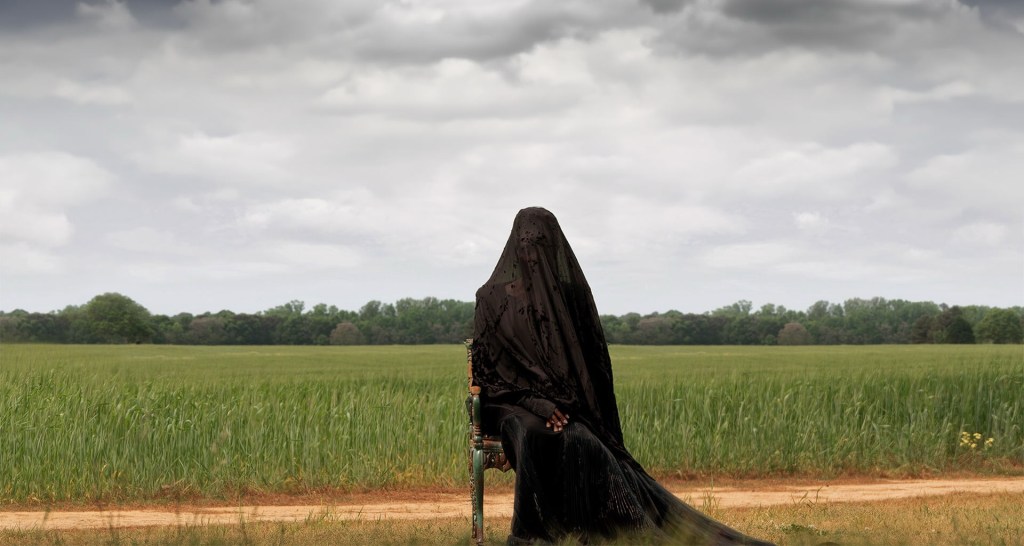
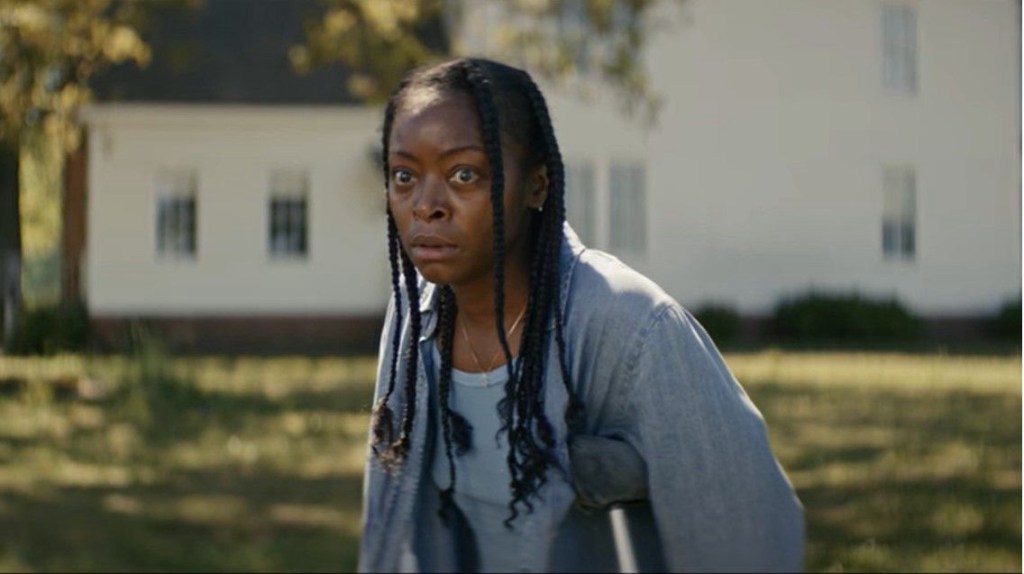
Ramona (Danielle Deadwyler) lives in a farmhouse with her two children, teenage Taylor (Peyton Jackson) and younger Annie (Estella Kahiha). Her husband has recently died in a car crash, and she’s walking around on crutches due to a leg injury from this fatal crash. One day, a mysterious woman (Okwui Okpokwasili) appears in their yard, wearing all black and with her face covered by a veil. She just sits there, and occasionally will say something ominous. The situation gradually becomes more menacing as the family attempts to discover who she is, what she wants, and how to get rid of her.

The Woman in the Yard is the latest in a series of horror movies about trauma and grief. From Hereditary and Midsommar to Smile and The Invisible Man, to the film this most closely resembles, The Babadook, this has become a cinematic trend in recent years. And the biggest problem with The Woman in the Yard is that it simply does not add anything new to this overall narrative that I was unfamiliar with. If I hadn’t seen all these other films, it’s possible I would’ve found more to appreciate here. There is an element to this story that doesn’t come in until the last ten minutes that came so close to hitting for me emotionally, but the film doesn’t quite have the courage of its convictions. I did appreciate a title card in the credits for a hotline for those who may be struggling with issues similar to those brought up in the film. That felt like a nice touch and the right thing for this film to do.
Danielle Deadwyler is also great, and she’s making a meal out of every crumb Sam Stefanek’s convoluted script gives her. But after seeing her work in films like Till and The Piano Lesson, I can’t help but think this is a waste of her time. Both child actors are also very good here. Nobody is working halfway on this thing, and I can definitely appreciate that. And the claustrophobia of this one-location story set in this house where the power has gone out and all the phones are dead provides for some effective mood setting, and the performers are trying their damndest to give some life to this mediocre material, but it doesn’t amount to all that much.
Another central problem here is that having seen this movie, I still don’t fully understand who the titular Woman in the Yard is, or what she represents, or what the rules of this movie are. She’s confined to this central location but the chair suddenly starts to move without her moving it, and there’s some (admittedly cool and inventive) camerawork involving shadows and lights. And those are elements that come in toward the end of the film and I wondered why we hadn’t been doing this the whole time. We spend a lot of time on atmosphere and mood establishing, and then we pivot into cheap jump scares, and I found that frustrating as well. And the final reveal brings up more questions about how the children in this story were able to see the titular Woman, and interact in this story, but I’m getting ahead of myself and that may constitute spoiler territory so let’s move on.
There’s so much about The Woman in the Yard that almost works, and it feels like perhaps the Blumhouse producers messed with this script or cut scenes or something, because it comes very close to hitting an emotional high point and it’s frustrating that we don’t get there. This current trend, which I’ll refer to as Trauma Dump Horror, has merit to it and I’m not going to suggest I’m sick of these movies because sometimes they can explore very worthwhile topics about human nature and emotional hardship. And I came really close to feeling something here, but I kind of left feeling unfulfilled. With a few script changes, The Woman in the Yard could have been a really great horror film, and I would jump at the chance to see an extended director’s cut. But the film available right now in theaters is a bit of a waste.
 Salt Lake Film Review