

Much has been written about the long-rumored reunion of filmmaker Robert Zemeckis and stars Tom Hanks and Robin Wright, previous stars of the legendarily successful 1994 film Forrest Gump. However, I don’t think many audiences know what this film actually is. After my screening of Here this afternoon, I heard many people around me say ‘that was not at all what I was expecting.’ And having knowledge of this film’s premise, and that being a selling point for me, I knew exactly what I was getting myself into when I bought a ticket for Here. Aspects of it did surprise me, however, for better and for worse.
Here follows the lives of the people who inhabit one space of land over hundreds of years. The camera never moves from its fixed position, but what does move at an overwhelming pace, is time. We see glimpses of dinosaurs, we meet indigenous people who once lived on that land, we see the house being built, we find that Benjamin Franklin once lived across the street. But the majority of the film takes place in one suburban living room. We see a couple move into the home in the 1920s, we meet a couple where the husband invented the La-Z-Boy recliner. And we spend most of the time with a post-WWII era couple (Paul Bettany and Kelly Reilly), and their son Richard (Tom Hanks) and his eventual wife Margaret (Robin Wright).
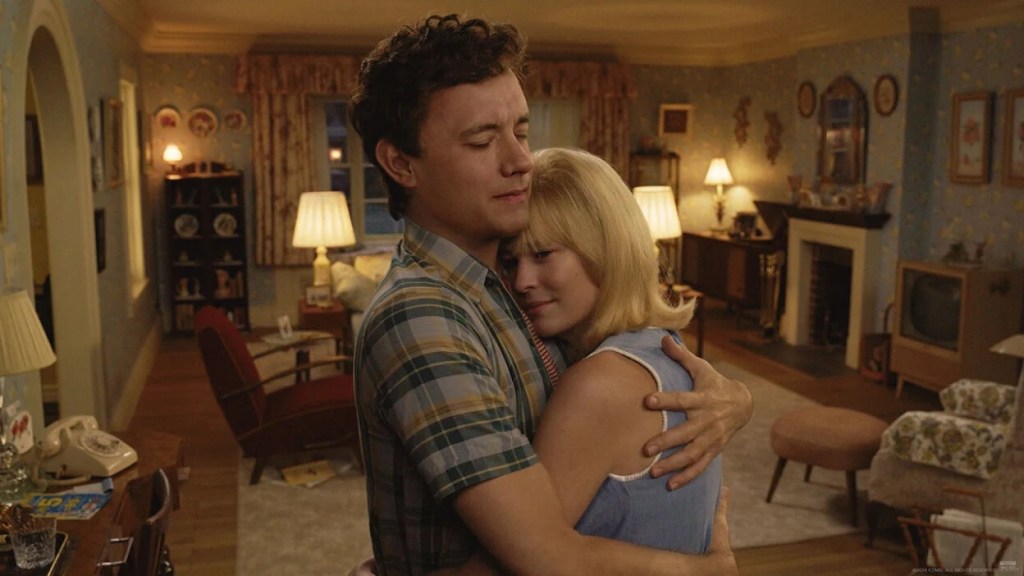
The concept of Here is a great one, adapted from the graphic novel by Richard McGuire. I picked up the graphic novel from the library last week because I wanted to see how strictly or loosely this piece of media was adapted, and compare styles and narrative structures. I was pleased to find a lot of the visual language from Here, the graphic novel, carries over to the film. The way we transition from scene to scene, era to era, and cut back and forth with no sense of linear cohesion, is right out of the source material. And while this doesn’t always work as a film, it’s always interesting to watch. And Here, the graphic novel goes way into the future, as well as further back than the film does.
As a film, you get the impression Zemeckis wanted to create something of a memory piece for himself, showcasing the kinds of families he knew growing up, and the way those memories manifest as someone moves on in years. There’s a particular affection and generosity toward the baby boomer era. We meet the family that buys the house after Richard and Margaret, and briefly touch on the Covid era, but the film doesn’t go beyond that point in time. It almost feels like Zemeckis is reluctant to imagine what the future could become for this space, which is understandable because I also shudder to imagine what’s to come in the next few decades, much less the next few hundred years.
And even though I love this concept, I found the execution somewhat distancing. We jump back and forth between all these stories so frenetically and Zemeckis’ screenplay, cowritten with Eric Roth, struggles to find a rhythm. He also struggles to find anything more substantive to say about the passage of time other than people repeating the words ‘time flies, doesn’t it?’, and the most basic observations about the missed opportunities, unrealized dreams and general hardships we all will recognize as we look back on our lives. As the film closes out its 105-minute running time, Zemeckis ruthlessly and shamelessly yanks at the viewer’s heartstrings. He really wants you to cry at the end, particularly in the film’s final scene, and even though it worked on me, I did tear up, this comes across as more manipulative than earned.
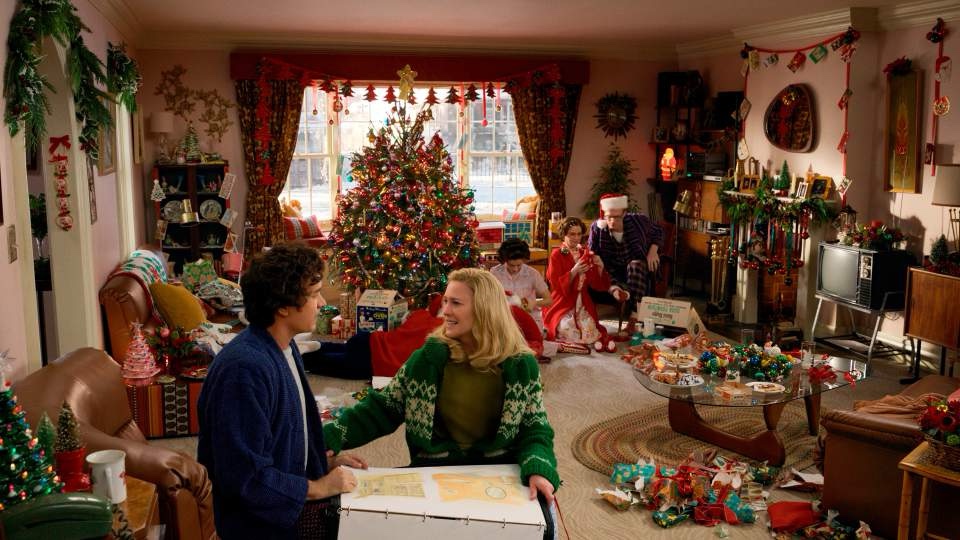
Ultimately, we never spend enough consecutive time with anybody for any of it to really make an emotional impact, or for me to really care about anything. There are individual moments that really work, and the film is always interesting from a visual perspective, but after a first viewing, I’m not sure how well it all worked as a cohesive whole. There is such a profound sense of sentimentality on display at every point and Zemeckis has a great affection for melodrama, and there is nothing wrong with that. However, when you have the sweeping Alan Silvestri score blaring as panels appear and disappear, pushing into different time periods, it just gives the negative impression that the audience is being told how to feel in every moment. And I feel like the audience is smarter than that, and we don’t need all of these extremely obvious emotional cues.
The performances are quite strong, considering the limitations of them, and the lack of depth for these actors to play. Much has been said about the use of de-aging happening here, and Zemeckis is still the old man playing with computers. And I will say the de-aging and aging up of the actors here is pretty seamless, and is rarely distracting, despite the fact that present day 68-year-old Tom Hanks does not move his body like a teenage Tom Hanks would have. If this were a stage play, and there is an inherent theatricality in this premise, the characters would be played by different actors at different points, and I wish that would have been the choice here as well.
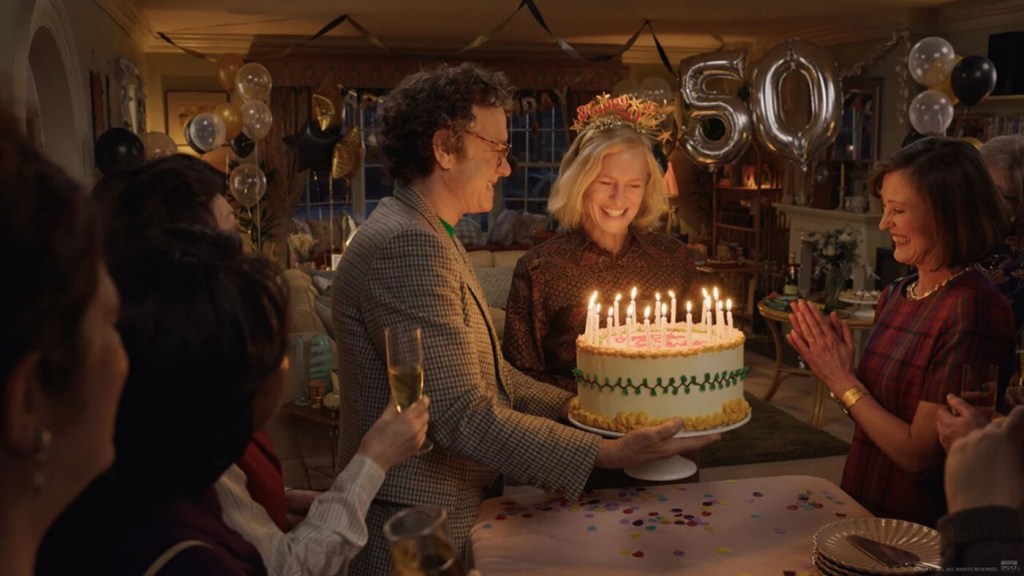
Overall, I enjoyed Here as a piece of experimental filmmaking, even as it never quite reached the levels of emotional depth it’s clearly aiming for. This is such a compelling idea, and while the execution of it may be something like a Hallmark movie at times, it’s impossible not to admire the attempt. There are too many stories, and too many characters, and as a singular piece of storytelling, it’s absolutely trying to do too much. Maybe this will be a film that will grow on me, and mean more to me if I see it again later on in life, but who can say? Here is luckily not the disaster I was dreading, given what Zemeckis has been making lately, but it’s not the great film it might have been.
 Salt Lake Film Review