
I’m a sucker for a good coming-of-age film. There are many tropes we so often see in these movies, and whether or not they work depends on if and how they ring true, and a general sense of authenticity and emotional truth. And writer/director Sean Wang’s debut feature film, Didi (弟弟), a semi-autobiographical dramedy, was a big hit at Sundance earlier this year. And I’m always wary of a film when it does well at Sundance, because a lot of those great reviews out of Park City, Utah don’t always translate to a wider audience when they finally see the finished film.
This is not one of those cases. Didi is full of warmth, laughter and heart. There is a distinct cultural specificity to this story and the language used, visually and verbally, but having been a teenager in the mid-to-late 2000s, I’m comfortable in saying there is something here to relate to for just about anybody.
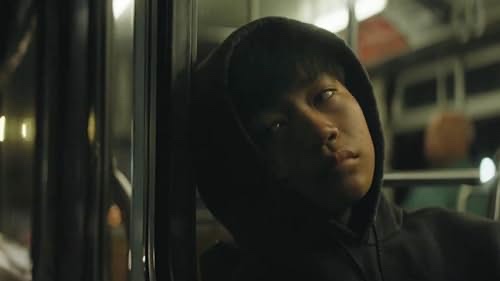
Open on a California suburb in the summer of 2008, and 13-year-old Chris Wang (Izaac Wang) is out of school for the summer. He lives with his mother Chungsen (Joan Chen), Nai Nai (Chang Li Hua) and older sister Vivian (Shirley Chen), who is about to leave for college in the fall. He tries to befriend a group of skateboarding teens, and tries to gain the courage to talk to the girl he likes, and gets himself into all sorts of trouble.
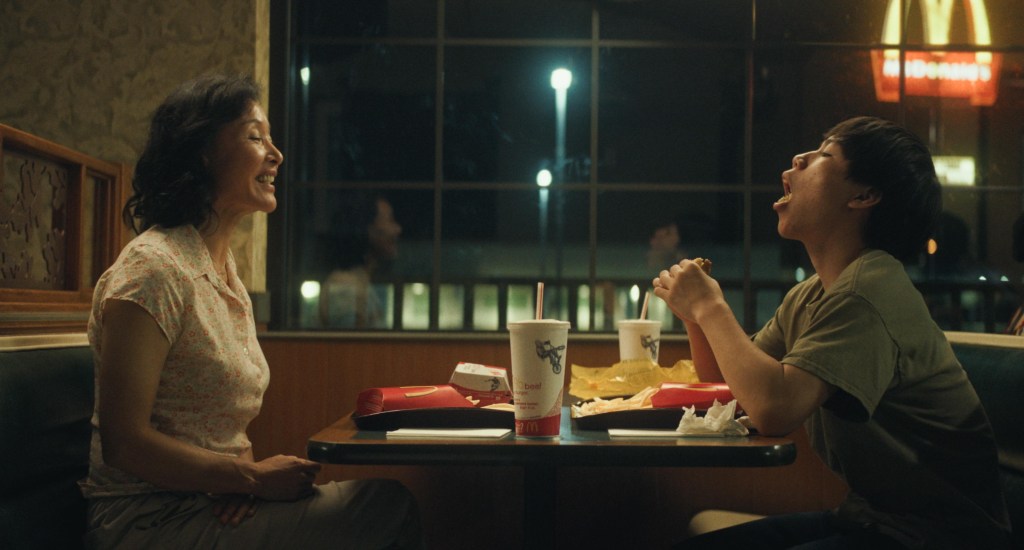
Being a young person in 2008 is something I remember specifically. I was a little older than Chris was in 2008, but there are certain elements, pop culture references, etc., that are so specific and such vividly alive details that feel like a version of my own memories. And the cultural aspect, of being an Asian-American teenager growing up in a distinctly American time and place, feels like it must be very specific to the filmmaker’s own experience, but the earnestness in which this story is told gives it the kind of universality to give any viewer something rewarding to take away from it.
Young Chris, played by Izaac Chang, is not a particularly likable character. He’s making all the wrong choices and sabotaging himself in ways that are so common when you’re a young teenager and trying to figure out who you are. He’s a bit annoying in the beginning, but the more time we spend with this character, the easier it becomes to have some profound empathy for the situation he’s in. At that age, every thing that happens feels like it’s this life changing event that is going to have big ramifications for every aspect of your life moving forward, and it never is. And Didi captures that in such a beautiful way.

We have some really nice performances in our supporting cast, namely from Joan Chen, playing Chris’s mother. There is clearly a whole life and a whole backstory written for this character, and we only get so much of it, but what we do have gives Chen so much to play around with, and the details in this performance are exquisite. We have that that reassuring monologue from the parent moment we see in so many of these films, toward the end, and Chen’s performance brought a tear to my eye.
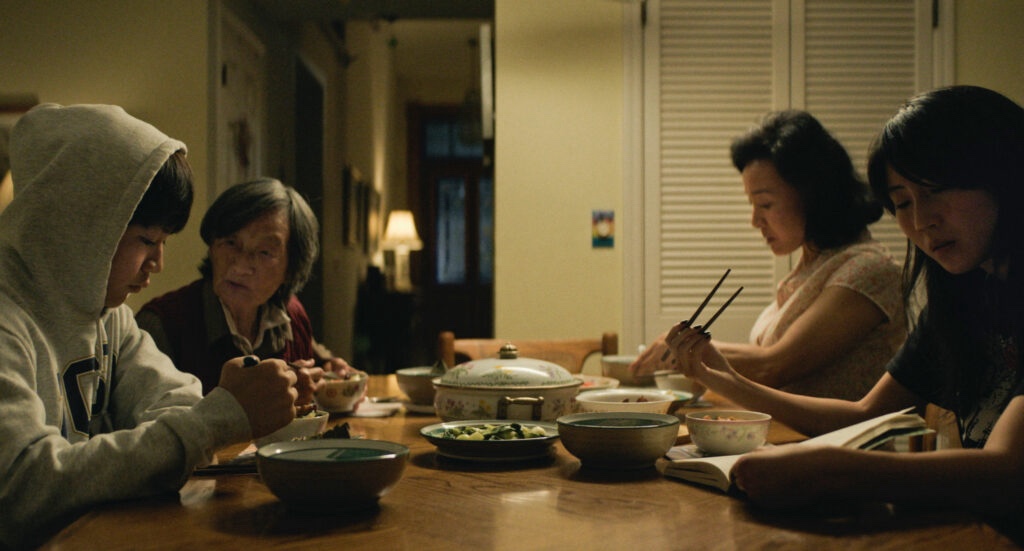
Didi is an finely detailed and beautifully made memory piece that is deeply poignant and well-observed. And it puts first-time feature filmmaker Sean Wang on the map in a memorable way. The universality of this story will make it something that can hit hard emotionally for just about any viewer, and it’s a deeply rewarding and life affirming experience. Chris is not perfect, and he’s constantly doing the wrong thing. And what little he learns about life by the end of this story is so small and it’s clear he has a lot of growing up to do before he finally comes into his own. But the message that we don’t change overnight or have some kind of grand realization that puts everything into perspective is a powerful one, the kind that can hit just about anybody powerfully.
 Salt Lake Film Review