
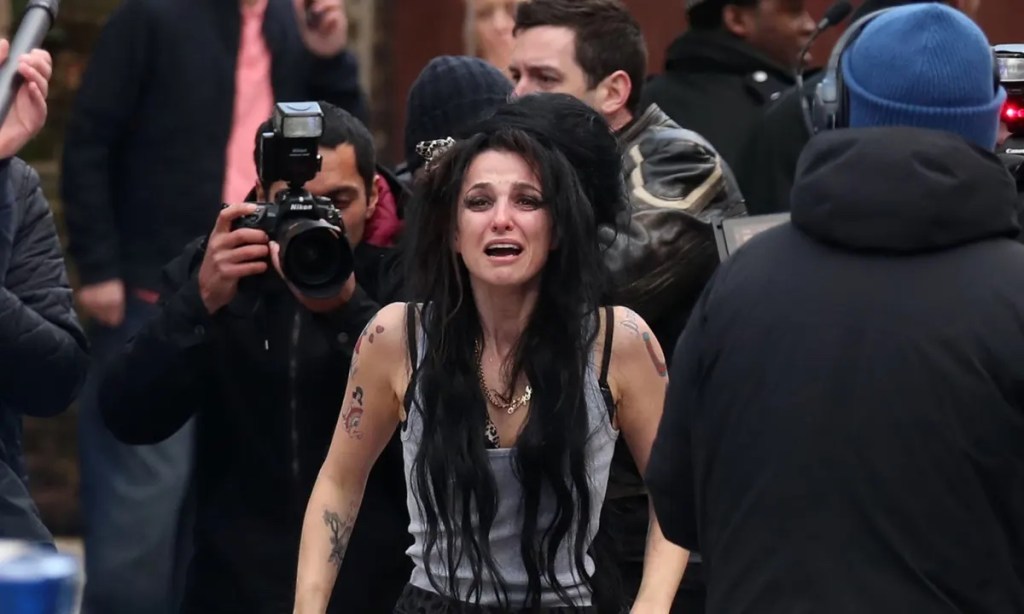
I will admit, I wasn’t expecting much from Back to Black, the new biopic of the doomed singer Amy Winehouse. The Oscar-winning documentary Amy, directed by Asif Kapadia, is enlightening and informative and gives the viewer an appreciation for her ingenuity while presenting her tragic story in a way that called out the people in her life that played a part in her ultimate downfall.
Director Sam Taylor-Johnson is a laughably incompetent filmmaker who has never made a good film in her life and has been given far too many chances to prove herself. She was not the right person to tell this story, and that’s clear from the very beginning. Music biopics are tricky to begin with. If you’re not slavishly following the beat-for-beat biopic cliches that have become the norm in these films, you run many other risks that can make it look like you’re being disrespectful to the subject’s legacy. And Back to Black has no respect for Amy Winehouse.
Fade in on the already very drunk and very mouthy Amy (Marisa Abela) who has always known her once-in-a-generation kind of singing voice has made her special. She speaks in cliches and broad generalizations about the kind of woman she is. She falls in love with loser Blake (Jack O’Connell), who (as far as the film depicts) doesn’t have a job and hangs around drinking in the corner pub all day. He gaslights her and toys with her emotions, and eventually goes back to a previous girlfriend, enabling her to write what became her definitive work, the album Back to Black.

There is no compelling reason for Back to Black to exist. As I mentioned, we already have the riveting 2015 documentary Amy, which actually gives you some kind of insight into the singer’s artistry, and the reasons behind the demons that led to her downfall. This narrative feature chooses to simply ignore most of that, and tell its own fictitious version of the events that led to Winehouse’s death at the age of 27. It completely absolves her family (namely her father) of any wrongdoing or any enabling of her drug and alcohol abuse.
Her father was the biggest culprit of all, according to the documentary, a film Mitch Winehouse has denounced publicly, likely because the documentary is telling the truth about him. Mitch wanted a bigger focus on the foundation his family created in the wake of Winehouse’s death, which presumably helps people struggling with addiction issues. As if that would somehow forgive him of his actions. In this version of the story, he’s a supportive father and never has a bad thing to say about anything going on. And we have a mention of this foundation in the end title crawl.
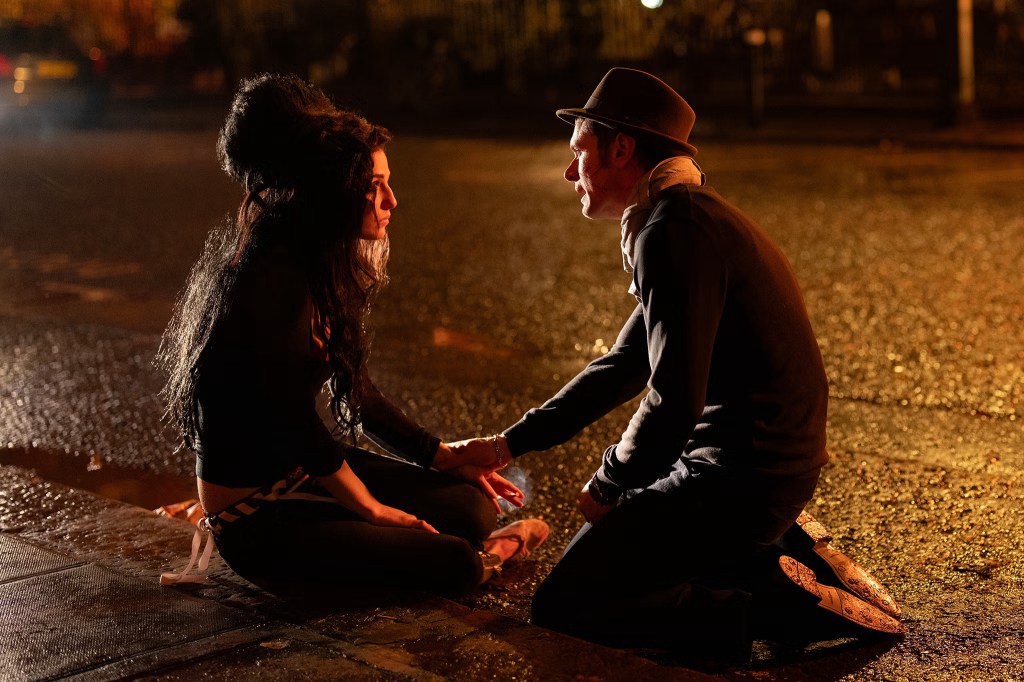
Marisa Abela is doing the best she can to elevate Matt Greenhalgh’s pedestrian, cliched and derivative screenplay, but she’s a good actor trapped in a project that feels doomed from the outset. The core problem here comes from the fact that Amy is painted as very weak and tragic woman who brought every single hardship and misfortune in life on herself. She is painted as selfish and demanding, flighty, and worst of all, a pathetic woman whose core problem was that she didn’t have a husband and a baby. The inherent misogyny on display through Taylor-Johnson’s lens should not be lost on any viewer. This is every bit as damaging and hateful as Blonde, Andrew Dominik’s hideous biopic of Marilyn Monroe.
Sam Taylor Johnson should be in director jail forever. I would have welcomed some more dry, inoffensive biopic cliches. Instead we have a wildly dishonest, crass, vile film that doesn’t seem to understand why Amy Winehouse was important or why she mattered. There are no scenes that depict Winehouse as passionate about music or the creation of it. There’s no scene depicting the inspiration for the big song. The music always seemed like the secondary priority to pleasing all the men in her life. And all the men are absolved and have no responsibility for her downfall whatsoever. And oddly enough, this version of Amy Winehouse never had any fun and was constantly depressed. This version of Amy Winehouse wants to be a wife and mother, and sabotages her own career and life from the very beginning and then she gets to die.
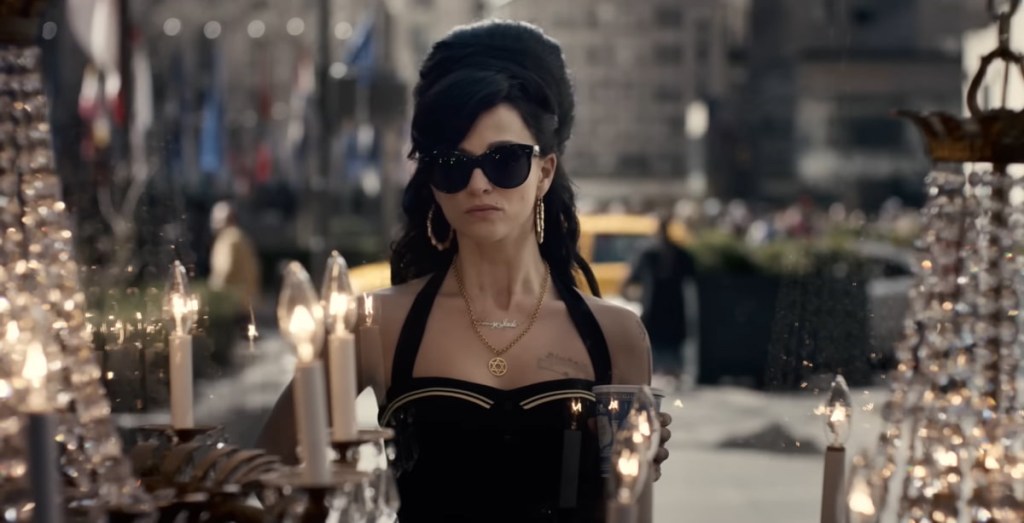
It feels ghoulish to have Winehouse’s family signing off on this film. If you see Back to Black, you should know going in that because of their involvement, anything you see onscreen in this film is not going to tell you any recognizable version of the truth of her life. It’s also important to note Winehouse suffered from bulimia for years, and that odds are strong that contributed to her weak state at the time of her death. But is that something this film addresses? Not in any meaningful way. What this film suggests as her breaking point is absolutely reprehensible.
Winehouse’s life was tabloid fodder and she was constantly mocked and belittled despite the many ignored cries for help that resulted in her death. Winehouse’s name is still being mocked, even in the context of her own biopic, and her career and achievements continue to be trivialized in the most crass, uncomfortable ways. Back to Black is one of the most vile, irresponsible, vulgar, exploitative and utterly damaging biopics I have ever seen. It’s like the cinematic equivalent of kicking the casket at the gravesite.
 Salt Lake Film Review