

As a fervent fan of Tina Fey’s 2004 teen comedy film Mean Girls, and an even more enthusiastic fan of the 2018 Broadway musical based on the film, I was very much looking forward to the new movie-musical Mean Girls. Despite a bunch of trailers that seemed to deliberately hide that this is based on the musical stage show, and made the film look like yet another remake that we didn’t really need. I leave this new Mean Girls film conflicted. The musical side of this film feels muted and way too much of it feels slavishly devoted to recreating the magic of the original 2004 film.
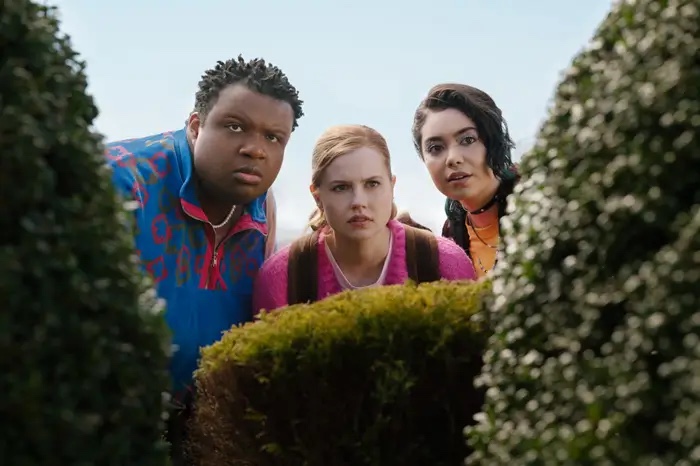
You know the story of Mean Girls, right? Well, if not, here’s an obligatory plot summary. Having been homeschooled, living in Kenya for most of her youth, 16-year-old Cady Heron (Angourie Rice) and her mother (Jenna Fischer) relocate to a Chicago suburb, where Cady immediately struggles to adapt. She is taken in by outcasts Janis (Auli’i Cravalho) and Damian (Jaquel Spivey). They tell her about the teen royalty clique ‘the Plastics’, including the insecure, ready-to-crack-at-any-moment Gretchen (Bebe Wood), the airheaded Karen (Avantika) and eponymous Queen Bee Regina George (Renee Rapp), adored and feared in equal measure. Cady is embraced by the Plastics, and agrees to spy on them and deliver information to Janis and Damian. Shenanigans and life lessons ensue.

Ultimately, the 2024 Mean Girls is about 60% a remake of the 2004 film, and 40% an adaptation of the Broadway musical. 14 of the musical’s 25 songs are cut from this film, and a majority of the songs that remain do not feel the same. Tina Fey and the film’s directors, Arturo Perez Jr., and Samantha Jayne (their directorial debut) have stated that the show’s music has been reworked to sound less Broadway and more like something you would hear on Spotify. And while I get that, from a business perspective – you want this film to be successful with the people this film should appeal to – lifelong theatre kids like myself might react with more of a shoulder shrug.
The musical set pieces that remain intact mostly work, and do feel more cinematic and less stagey, so on one hand that’s a good thing. However, some strange decisions are made. In the original Broadway cast, Cady is played by an actress named Erika Henningsen, who has a big, booming Disney princess-ish voice. Angourie Rice whisper sings her songs, and maybe it’s just because she does not have a Broadway caliber voice, maybe it’s because that quiet, moody Billie Eilish thing is in right now, but her songs keep the viewer at a distance. On stage, Cady’s introductory number, It Roars, is much more lively and energetic than the new song, What Ifs (co-written by Renee Rapp), that replaces it. As a result, it makes Rice’s performance and the character of Cady to feel like something of an afterthought.
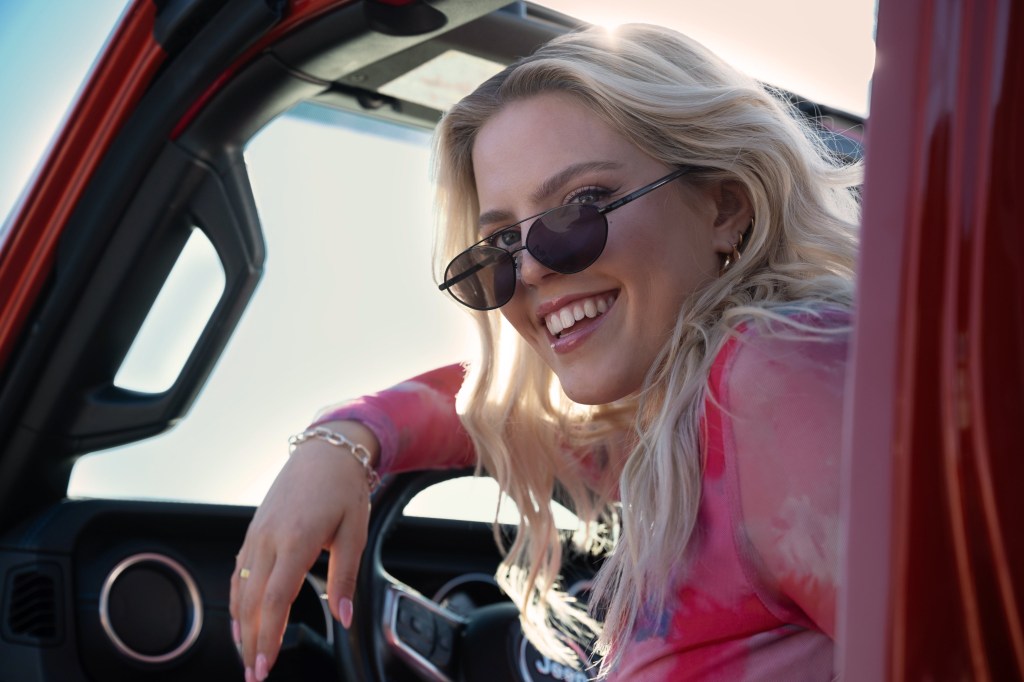
However, what’s good here is really good, and what works leaps off the screen. This new version of Regina George, also played on Broadway by Renee Rapp, is increasingly vampy and dangerous. She seems equally likely to make out with Cady and kick her ass. Rapp, known for her solo music career and her role on Max’s The Sex Lives of College Girls, is an entertainer who has been around for five minutes, and yet seems like she can do just about anything. And she brings insatiable life to this material, bringing it to the level where it needs to be whenever she’s onscreen. On the stage, the Regina songs are always the standouts, and the same is true for this film.
Also, Moana’s Auli’iCravalho is a pretty spectacular Janis. Cravalho does right by her signature anthem I’d Rather Be Me (my favorite song in the show), this time framed with a manic long-take energy, serving as an emotional high point for the character and the narrative itself. Also, luckily, the big group number led by Cravalho, Revenge Party, is a total blast and comes to energetic life onscreen in a way these numbers don’t always accomplish in this screen version.

Jaquel Spivey, fresh off a Tony-nominated performance in Broadway’s A Strange Loop, is a depressingly underused Damian, which is a shame since Spivey has spectacular comedic timing and fits effortlessly into this role. His big numbers (namely the act 2 standout Stop) are either gone completely or shaved down to an exoskeleton of their stage counterparts. The stage musical kicks off with two big numbers, one where Janis and Damian are showing Cady around the school and describing its cliques (Where Do You Belong), culminating in a giant group dance number, then leading into Meet The Plastics, where each member of the eponymous trio gets an introductory verse. This sequence is cut down to dialogue exposition and just Regina’s verse of Meet the Plastics, irritating this viewer off the top.
In the stage musical, the ditzy Karen is framed as the idiot savant who is also somehow simultaneously the smartest person in the room. Everyone would dismiss her until she made a point that made everyone stop and stare. Here, Karen is played by Avantika, an actress I was not familiar with. She eats up her number Sexy with a spoon and leaves no crumbs. But beyond that, Karen has very little to do, and that’s a shame since the glimmers we get from Avantika hint that she is more than up to the challenge of adding more to this character. In the musical, Karen has a standout moment in the Damian number Stop, which (ahem) stops the audience dead in its tracks. If you know, you know. And unfortunately we get no version of that here.

I had seen and very much enjoyed Bebe Wood in Hulu’s Love, Victor, and on paper she’s the perfect Gretchen. She plays the close-to-unhinged thing very well, and I know Wood is established as a singer, and has a big, Broadway-ready voice. And yet, Gretchen’s one song feels very – off. In a similar way to Angourie Rice’s songs, it feels very whispery and unenergetic. The song in question, What’s Wrong With Me? – is basically Gretchen’s internal monologue, questioning her place in the friend group, and as the song is staged in the film, the quieter nature of it makes sense. However, I would have liked to have seen Bebe Wood give this song a full belt, because I know she has it in her. It is nice to see the original Broadway Gretchen – Ashley Park, also known for her role in Netflix’s Emily in Paris, show up here in a small role.
Considering this is the feature directorial debut of directors Arturo Perez Jr. and Samantha Jayne, both filmmakers seem to understand what’s cinematic and what belongs on the stage, musical wise. However, my mind went to when Universal hired Susan Stroman, a theatre director, to adapt her version of The Producers to the screen. Susan Stroman had no idea what belonged on a film screen and what belonged on stage, and what we got from that movie was essentially a filmed version of the stage musical. Critics ridiculed the film for this, and the film didn’t make money. And yet, The Producers (2005) remains a film I rewatch frequently. This version of Mean Girls remembers to be cinematic and not stagey. And part of me wishes it had its roots a little more in the Broadway stage and someone like Stroman (or maybe Julie Taymor) made this instead.
Having transferred these songs from musical numbers back into expository dialogue allows Fey to reuse a lot of the same iconic dialogue from her original script. There are way too many moments you know here, delivered in a way where the performers are so aware of them, that they often seem afraid to make them their own – with a couple of exceptions. Again, Rapp and Cravalho are doing fabulous work, and the film reaches a different level when they’re on screen. I just wish we could have stayed at that level the entire duration.
Overall, I’m a little conflicted about this new version of Mean Girls. There are aspects of it I very much enjoyed, individual songs that are well staged and well sung. Overall, the cast is giving this their all, and nobody is poorly cast. Renee Rapp and Auli’i Cravalho make the entire endeavor kind of worth it. And I guess if the viewer is going in expecting those iconic moments and fan-favorite line readings from the original movie, then they’ll get what they came for. And the film does work in the world we live in now, the inclusion of social media and the way bullying has changed since 2004 – in a compelling way. There are also a few fun surprises to be had here that I will not spoil. And I do not think this film will alienate those opposed to musicals. There is maybe 30-40 minutes of music in this nearly two hour long film. And in this viewer’s opinion, there should be more.
 Salt Lake Film Review